
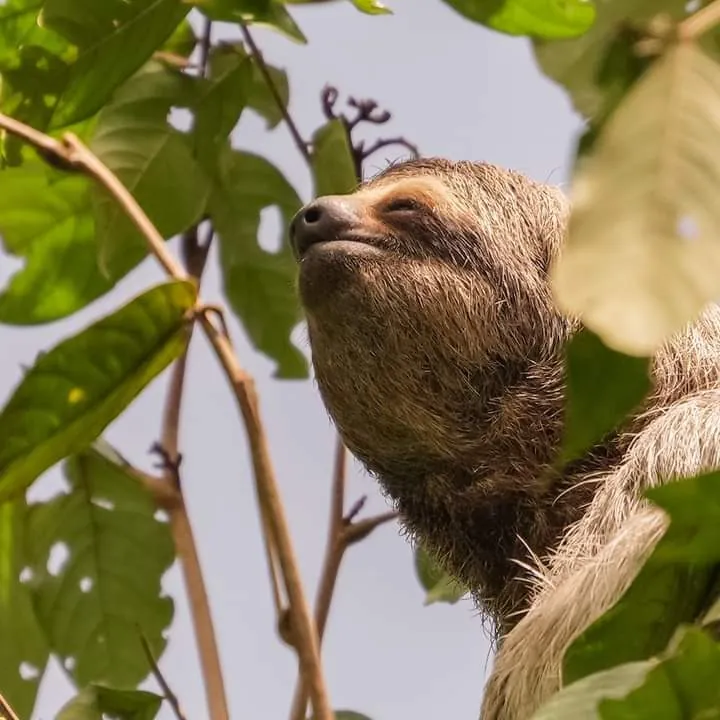
Sloths in Costa Rica top the wish list of many visitors, and they are also among the most misunderstood animals in the country. They are not lazy, they are not primates and, despite what many photos suggest, they should never be held. This species guide from Tamarindo Estuary Tours Mi Rey explains the two sloths that live in Costa Rica, how their unusual biology works, where you can see them from Tamarindo and how to watch them in a way that does not harm them.
Short answer: Costa Rica has two sloth species, the Hoffmann’s two-toed sloth and the brown-throated three-toed sloth. In Guanacaste they are easiest to find in greener forests inland rather than on the dry coast, so from Tamarindo the practical option is a guided tour such as our Sloths and Llanos de Cortés Waterfall day. Always watch them from a distance: no touching, holding or feeding.
The two species of sloths in Costa Rica
The names refer to the claws on the front limbs, but the differences go much deeper. The two species belong to different families and developed their tree-hanging lifestyle separately. Their closest living relatives are anteaters and armadillos, not monkeys.
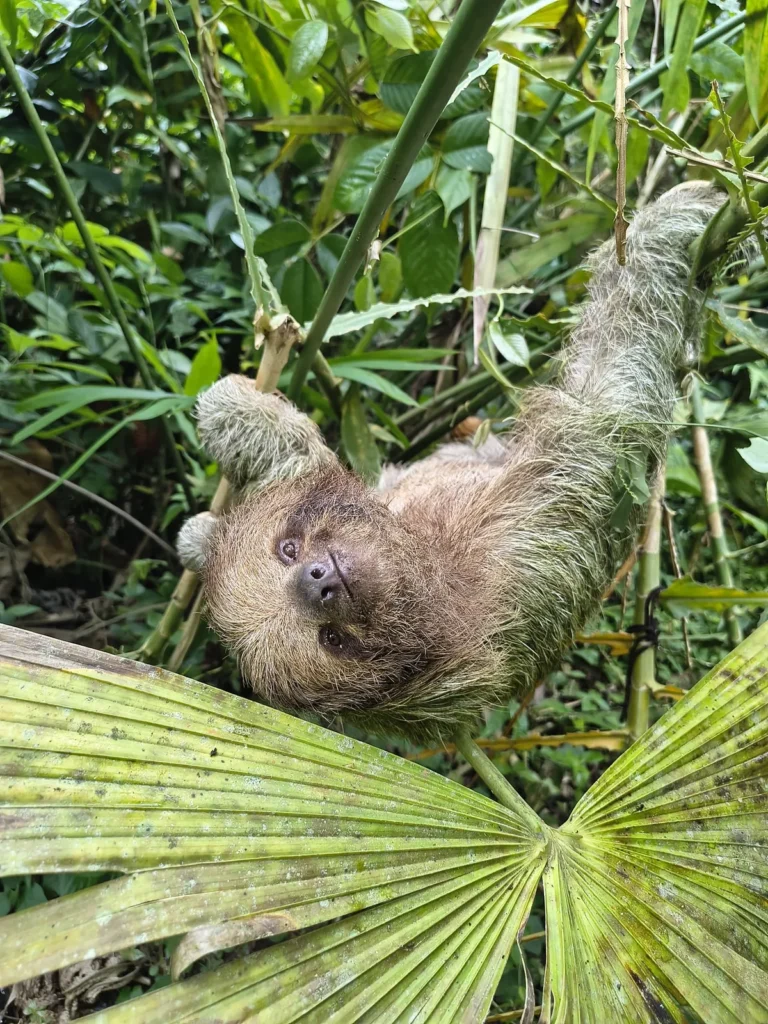
- Hoffmann’s two-toed sloth (scientific name Choloepus hoffmanni): larger, with long pale-to-brown fur and a snout. It is mainly active at night and eats a mixed diet of leaves, fruit and flowers.
- Brown-throated three-toed sloth (scientific name Bradypus variegatus): smaller, with a dark mask around the eyes and a short tail. It can be active by day or night and feeds almost only on leaves.
Our sloth tour in Guanacaste guide has a field checklist to tell them apart on the tour itself.
Sloth facts: slow by design
A sloth’s slowness is a survival strategy, not laziness. Leaves give very little energy and are hard to digest, so sloths have evolved to spend as little energy as possible.
- A very slow digestion. Sloths have a stomach with several chambers where bacteria break down leaves. A single meal can take days, even weeks, to pass through.
- A low, changing body temperature. Unlike most mammals, their body temperature rises and falls with the weather, which is why you often see them resting in the sun in the morning.
- Built for hanging. Long, curved claws hook around branches, so a sloth can hang for hours with little effort. Eating, sleeping and even giving birth happen up in the trees.
- A weekly trip to the ground. Sloths climb down about once a week to go to the bathroom at the base of a tree. It is their most vulnerable moment, when dogs and other predators can reach them.
- Good swimmers. Surprisingly, sloths swim well and sometimes cross rivers.
- A living coat. The fur of the three-toed sloth hosts algae, tiny moths and other insects. The greenish tint of the algae helps it blend into the canopy.
A common claim is that sloths sleep 20 hours a day. Those figures came mostly from animals in captivity; research on wild sloths suggests they sleep much less, closer to 10 hours. They rest a lot, but they are not asleep all the time.
Where to see sloths in Guanacaste
Guanacaste is the driest region of Costa Rica, and that shapes where sloths live. In the dry season many trees of the lowland dry forest drop their leaves, which leaves less food and less cover. Sloths do best where the canopy stays continuous and green: forests along rivers and the wetter areas inland, toward the mountains. Learn more about this ecosystem in our guide to the tropical dry forest of Guanacaste.
Near the coast, sloths are not among the animals we usually show. On our Tamarindo estuary tour, the regular sightings are American crocodiles, herons, iguanas and howler monkeys, which our guides look for in the mangrove and the dry forest on every outing.
Sloth tour in Guanacaste from Tamarindo
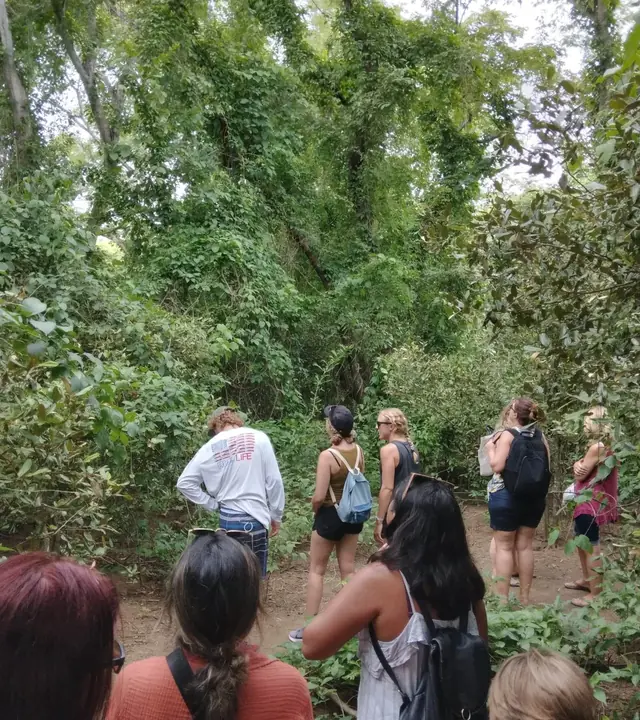
For sloths, our sloth and waterfall tour from Tamarindo takes you inland with a guide who knows which trees they use, and adds a swim at the Llanos de Cortés waterfall. Look for a ball of fur in the fork of a branch: that is how most sloths appear at first.
The tour costs $185 per person (minimum 4 people), runs from 6:30 am to about 6 pm and includes transportation, entrance tickets, drinks and a Costa Rican lunch. As with all wildlife, sightings cannot be guaranteed.
Ethical sloth viewing: can you touch a sloth?
Sloths are quiet animals that rely on staying still and unnoticed. Being approached, touched or carried is very stressful for them, even if they do not show it the way other animals would. The short answer is no. Follow these rules wherever you see one:
- Never touch, hold or hug a sloth. Handling stresses them and can pass on germs or injure them. Their claws can also hurt you if a frightened sloth grabs.
- Never feed them. Their digestion is adapted to specific leaves, and the wrong food can make them seriously ill.
- Keep your distance and keep quiet. Watch from the trail or the vehicle and let the guide position the group.
- No flash and no shaking branches to make a sloth move or look at the camera.
- Do not pay for photos holding a sloth. Wild animals are protected by law in Costa Rica, and attractions that let visitors handle sloths keep the animals in conditions that harm them.
- Use the zoom. A phone at 3x or a camera lens of 200 mm or more gives you a good photo from a respectful distance.
If you find a sloth on the ground
Seeing a sloth on the ground does not always mean it needs help: it may be going to the bathroom or moving between trees. If you come across one, follow these steps:
- Do not pick it up or place it on a tree yourself.
- Keep people and dogs away and watch quietly from a distance.
- Give it time. A healthy sloth will usually climb the nearest tree on its own.
- Ask for help if it is at risk. If it looks injured, is on a road or near power lines, or is attacked by dogs, contact the National System of Conservation Areas (SINAC) or ask your hotel to call the local authorities.
Threats and how visitors can help
Neither Costa Rican species is considered globally endangered, but both face real local threats: loss and fragmentation of forest, electrocution on uninsulated power lines, being hit by cars when crossing roads, attacks by dogs and the illegal trade in pets and photo props. As a visitor, you help by choosing tours that watch wildlife from a distance, by refusing any experience that involves holding wild animals and by sharing these rules with other travelers.
Ready to see sloths in their habitat? Book the Sloths and Llanos de Cortés Waterfall tour with Tamarindo Estuary Tours Mi Rey online with a $75 deposit per person, or write to us on WhatsApp if you have questions about your date or your group.
Book these tours
Frequently asked questions
How many species of sloth live in Costa Rica?
Two: the Hoffmann’s two-toed sloth and the brown-throated three-toed sloth. They look similar at first glance, but they belong to different families and behave differently.
Are there sloths in Tamarindo?
Sloths are not among the animals we usually show on our estuary tours, where the stars are crocodiles, birds and howler monkeys. For sloths, our full-day tour goes to a greener inland area with a guide who knows where they live.
Is it ethical to take a photo holding a sloth?
No. Handling causes stress to a wild sloth and can make it sick or injure it, and wild animals are protected by law in Costa Rica. Take your photo from a respectful distance with a zoom lens instead.
What should I do if I find a sloth on the ground or on a road?
Do not pick it up. Keep people and dogs away and give it space, since sloths come down to the ground regularly. If it looks injured or is in danger, contact the National System of Conservation Areas (SINAC) or ask your hotel to call the local authorities.
Are sloths in Costa Rica endangered?
Neither of the two Costa Rican species is considered globally endangered, but both face local threats such as forest loss, power lines, roads, dogs and the illegal pet and photo trade.
More Tamarindo guides
 Day trips from TamarindoDay Trips from Tamarindo: Rincón de la Vieja, La Leona and SlothsCompare three full-day trips from Tamarindo: Rincón de la Vieja volcano, La Leona waterfall and a sloth tour. Prices, hours, what is included and tips.
 Day trips from TamarindoGuanacaste Tours from TamarindoGuanacaste tours from Tamarindo: mangroves, dry forest, Rincón de la Vieja volcano, waterfalls, beaches and sea turtles, and which tour reaches each.
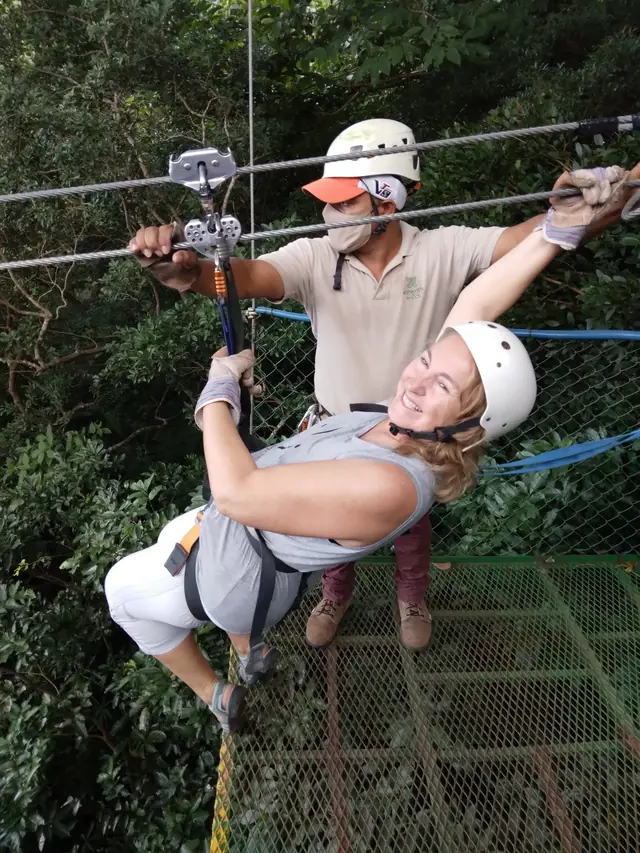 Day trips from TamarindoTamarindo Adventure Tours: Kayak, Horseback, Waterfalls and VolcanoTamarindo adventure tours ranked by effort: horseback riding, mangrove kayaking, Rincón de la Vieja, sloths and waterfalls, and the La Leona canyon hike.
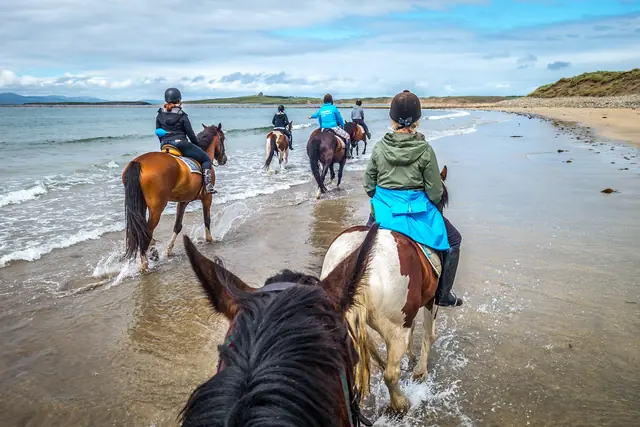 Day trips from TamarindoTamarindo Combo Tours: Two Experiences in One OutingTamarindo combo tours: the boat and horseback combo for $80, the Rincón de la Vieja full-day combo for $180, and how to combine tours across days with tides.
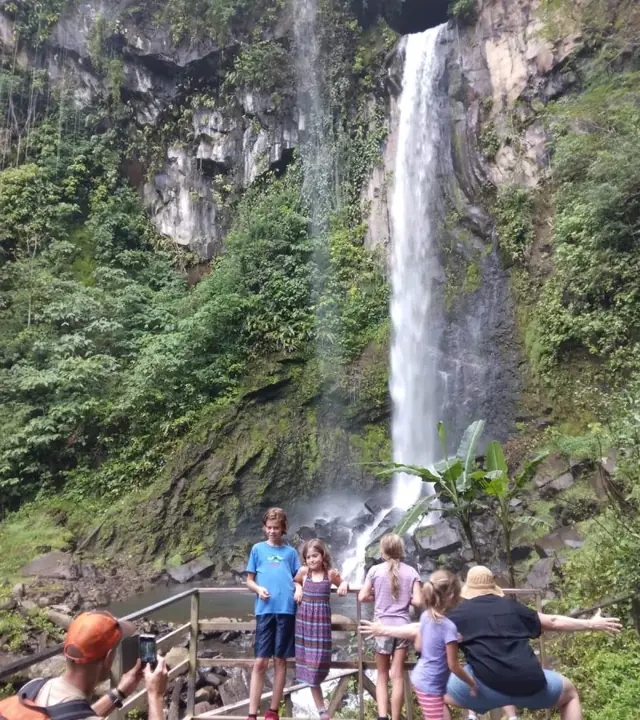 Day trips from TamarindoRincón de la Vieja Tour from Tamarindo: Full GuideRincón de la Vieja tour from Tamarindo: the volcano park, dry forest, schedule, fitness level and what the $180 full-day combo includes. Minimum 4.
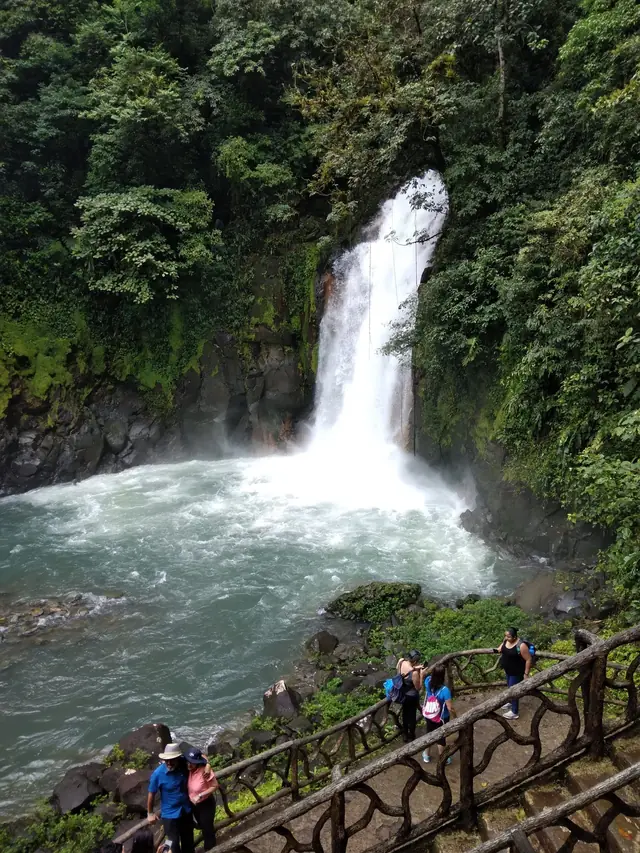 Day trips from TamarindoLa Leona Waterfall Tour from TamarindoLa Leona waterfall tour from Tamarindo: the river and canyon hike, swimming, difficulty, best season and what the $160 day trip includes. Minimum 4.