A crocodile tour in Tamarindo is one of the simplest ways to see a large wild reptile in Costa Rica without a long drive. The American crocodile lives in the Tamarindo estuary, a few minutes from the beach, inside Las Baulas Marine National Park. This guide focuses on the crocodile itself: where it rests, how it behaves, how to watch it safely, which tide works best and how to get good photos.
Short answer: the best place to see wild crocodiles near Tamarindo is the Tamarindo estuary, on a guided boat tour that leaves with the high tide. With Tamarindo Estuary Tours Mi Rey, the shared boat tour costs $40 per person, lasts 2 hours and includes a bilingual guide. Sightings are frequent but, as with any wild animal, they cannot be guaranteed.
Where to see crocodiles near Tamarindo
The Tamarindo estuary is where the river meets the Pacific Ocean, at the north end of Tamarindo beach. Its calm, brackish channels and muddy banks are ideal habitat for the American crocodile, a species that tolerates salt water better than most crocodiles. The estuary is part of a national park, so the animals live free in a protected area, not in an enclosure.
The well-known crocodile bridge over the Tárcoles River is in the Central Pacific, several hours away by road. If you are staying in Tamarindo, the estuary is the practical choice: pickup from Tamarindo or Langosta is included on the shared boat tour, and you can be watching crocodiles shortly after leaving your hotel.
Crocodile tour Tamarindo: what you will see
The American crocodile is the largest reptile in Costa Rica. Large adults can measure more than 4 meters (about 13 feet), although many of the crocodiles you see are smaller. On the tour, guides usually find them in one of three situations:
- Resting on the banks, often with the mouth open. This is how they release heat; it is not a sign of aggression.
- Floating in the channel with only the eyes, the nostrils and the top of the back above the water.
- Sliding slowly into the water as the boat passes, which is normal behavior for a shy animal.
Crocodiles are cold-blooded, so they spend much of the day regulating their temperature, moving between sun, shade and water. They feed mainly on fish and hunt mostly at dusk and at night, which is why daytime tours usually show calm, resting animals.
The same outing also shows herons, iguanas and, on the short dry-forest walk, howler monkeys. For the full list of animals, see our guide to wildlife in Tamarindo.
Is a crocodile tour safe?
Yes, with a local guide and a few simple rules. The guide and the captain know where crocodiles usually rest and keep the boat at a respectful distance. On board:
- Keep hands, feet and cameras inside the boat.
- Never feed or call the animals. Feeding teaches crocodiles to approach people, which is dangerous and prohibited.
- Stay seated and follow the instructions of the captain.
Outside the tour, use common sense: do not swim in the estuary or near the river mouth, and keep children and pets away from the edge of the water in that area.
Best tide and time to see crocodiles
Boat and kayak tours leave with the high tide, when the water is deep enough to enter the mangrove channels. Because high tide arrives a little later each day, the departure time changes, and we confirm it by WhatsApp after you book. Our guide to Tamarindo tides explains how it works.
- Morning tides are often the most comfortable: softer light, less heat and, after a cool night, crocodiles tend to rest in sunny spots to warm up.
- Afternoon tides in the rainy season (May to November) can bring showers. Light rain does not usually stop the tour; if conditions are unsafe, we offer you another date or a refund.
- Any month: crocodiles live in the estuary all year, so there is no special crocodile season.
Boat or kayak for crocodiles?
For crocodiles, the boat is usually the better choice. It covers more of the estuary, gives you a stable platform for photos and keeps a comfortable distance from the animals. The kayak is quieter and closer to the water, which many people enjoy for birds and mangroves, but it focuses less on crocodiles. Compare both options in boat or kayak in Tamarindo.
- Shared boat tour: $40 per person, 2 hours, minimum 2 people, children 2 and under free. Deposit of $15 per person.
- Private boat for up to 10 people: $800 per boat, 2 hours, with a bilingual naturalist guide. A good option for photographers who want to stay longer with each animal.
- Shared kayak tour: $60 per person, 2 to 2.5 hours, minimum 2 people.
Photo tips for crocodiles
- Use the zoom. A phone at 3x or a camera lens of 200 mm or more lets you fill the frame from a respectful distance.
- Rest your elbows on your knees to keep the camera steady while the boat moves.
- Focus on the eye. A sharp eye makes the photo, even if the rest of the animal is in shade.
- Polarized sunglasses help you see animals just under the surface; a polarizing filter does the same for a camera.
- Turn off the flash. It does not help in daylight and it disturbs wildlife.
Ready to see wild crocodiles with Tamarindo Estuary Tours Mi Rey? Book the shared boat tour online with a $15 deposit per person, or reserve the private boat for your group. If you have questions about the tide on your date, write to us on WhatsApp and we will help you plan.
Book these tours
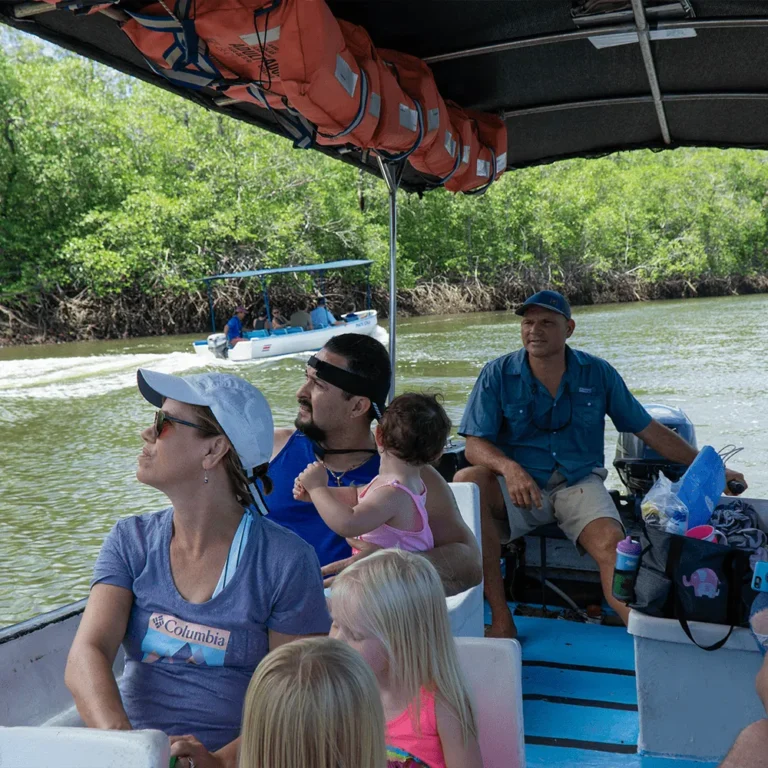 Shared Boat Tour (Mangrove Safari)$40 per personSee tour and book →
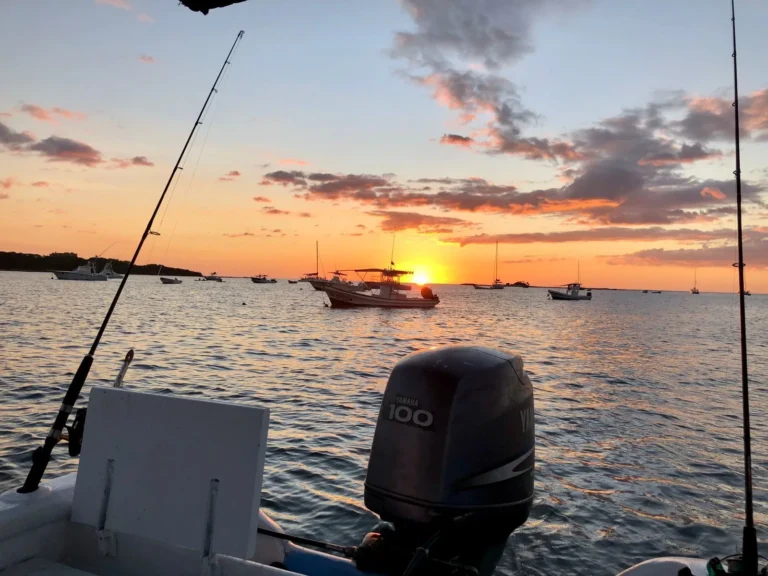 Private Boat Tour · up to 10 people$800 per boatSee tour and book →
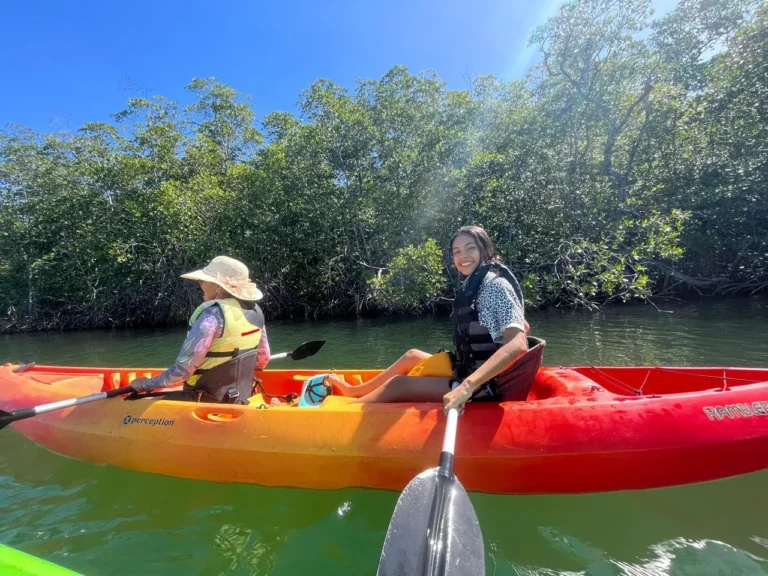 Shared Kayak Tour$60 per personSee tour and book →
Frequently asked questions
How big are the crocodiles in the Tamarindo estuary?
The American crocodile is the largest reptile in Costa Rica, and large adults can measure more than 4 meters (about 13 feet). Many of the crocodiles seen on the tour are smaller, and all are observed from the boat at a respectful distance.
Is there a crocodile season in Tamarindo?
No. American crocodiles live in the Tamarindo estuary all year, in both the dry and the rainy season. What changes from day to day is the tide, which sets the departure time of the tour.
Are crocodiles more active at a certain time of day?
Crocodiles hunt mostly at dusk and at night. During the day they usually rest on the banks or float quietly in the channels, which makes them easier to observe and photograph.
Do the guides feed the crocodiles to attract them?
No, never. Feeding crocodiles is prohibited and teaches them to approach people, which makes them dangerous. On our tours you watch their natural behavior.
How far is the crocodile tour from my hotel in Tamarindo?
The estuary is only a few minutes from central Tamarindo. Pickup from Tamarindo or Langosta is included on the shared boat tour, and farther areas have an extra transportation cost paid to the driver.
More Tamarindo guides
- Tamarindo Estuary: Crocodiles, Tides and What to BringPlan your Tamarindo estuary tour: crocodiles, herons and howler monkeys in Las Baulas, why the tide sets the time, what to bring, and boat or kayak prices.
- Boat or Kayak? How to Choose Your Mangrove Tour in TamarindoTamarindo kayak tour or boat tour? Compare shared and private options by effort, wildlife, kids rules, tides and price, from $40 per person.
- Tamarindo Mangrove Tour: Why the Mangrove Forest MattersTamarindo mangrove tour guide: the types of mangroves, why they are a nursery for fish and wildlife, and how to explore them by boat or kayak from $40.
- Wildlife in Tamarindo: Animals You Can See and WhereWildlife in Tamarindo: crocodiles, howler monkeys, iguanas, crabs, birds, sloths and sea turtles, with the tour, place and season to see each animal.
- Birdwatching in the Tamarindo Estuary: Birds You Can SeeBirdwatching in Tamarindo: herons, egrets, kingfishers, ospreys and spoonbills in the estuary, the best season and tide, tips for birders and which tour.
- Where to See Monkeys in TamarindoWhere to see monkeys in Tamarindo: howler monkeys in the Las Baulas dry forest, best time of day, how to watch them respectfully and which tours go there.