Seeing monkeys in Tamarindo is easier than many visitors expect. Short answer: the best place to see howler monkeys in Tamarindo is the tropical dry forest of Las Baulas Marine National Park, on the other side of the estuary, which you reach on a guided boat or kayak tour. Howler monkeys are also sometimes heard or spotted in tall trees around town, but a guided walk in the park gives you the best chance of finding a troop and learning how they live.
Which monkeys can you see in Tamarindo?
Howler monkeys (mono congo)
The mantled howler monkey is the species you are most likely to meet. It has dark fur, with a golden fringe along the sides of the body, and lives in troops that move slowly through the treetops. Howlers eat mostly leaves, fruit and flowers, and because leaves give them little energy, they spend a large part of the day resting in the branches.
Their famous roar is a deep, powerful sound that can be heard from far away. It is how a troop marks its territory. Many visitors hear them first thing in the morning, which is why howler monkeys are often heard before they are seen.
Other monkeys of Guanacaste
White-faced capuchins also live in the forests of Guanacaste. They are smaller, faster and more curious than howlers, with a white face and chest. Spider monkeys live in some forested areas of the province as well, but they are less common. Around the Tamarindo estuary, the howler monkey is by far the most frequent sighting, so it is best to plan your visit around it.
Where to see monkeys in Tamarindo
- The dry forest of Las Baulas Marine National Park. The forest next to the estuary has the tall trees howler monkeys need. This is where our guides lead the forest walk on the estuary tours.
- The edges of the mangrove. From the boat or the kayak, your guide watches the trees where the mangrove meets the forest, a good place to spot a troop resting.
- Tall trees around town. Some troops move through the green areas near Tamarindo. If you hear a roar from your hotel, look up into the highest branches.
During the forest walk, your guide also shows you the Guanacaste tree (the national tree of Costa Rica), the ceiba and the thorny cedar. To learn about the rest of the animals of the area, read our Tamarindo wildlife guide.
Best time to see howler monkeys in Tamarindo
Howler monkeys are most active and vocal early in the morning and late in the afternoon. In the middle of the day they usually rest in the shade, which makes them quieter but still visible to a trained eye.
Season also matters. From December to April, the dry season, many trees in the dry forest lose their leaves, so it is often easier to see the troops in the bare branches. From May to November the forest is green and dense; the monkeys are still there, but your guide may need to find them by sound.
Keep in mind that estuary tours leave with the high tide, so the departure time changes every day. We confirm the exact time for your date by WhatsApp. Our guide to Tamarindo tides explains why.
How to watch monkeys respectfully
- Never feed them. Human food makes monkeys sick, changes their behavior and teaches them to approach people. Feeding wild animals is not allowed in Costa Rica.
- Keep your distance. Let the troop move freely and never try to touch a monkey or call it closer.
- Stay quiet. Speaking softly lets you watch natural behavior for longer.
- Do not use flash. Natural light is enough, and flash disturbs the animals.
- Do not stand right under a troop. Monkeys sometimes drop leaves, fruit and more from the branches.
- Follow your guide. Stay on the trail and listen to the instructions given during the walk.
Tours to see monkeys with Tamarindo Estuary Tours Mi Rey
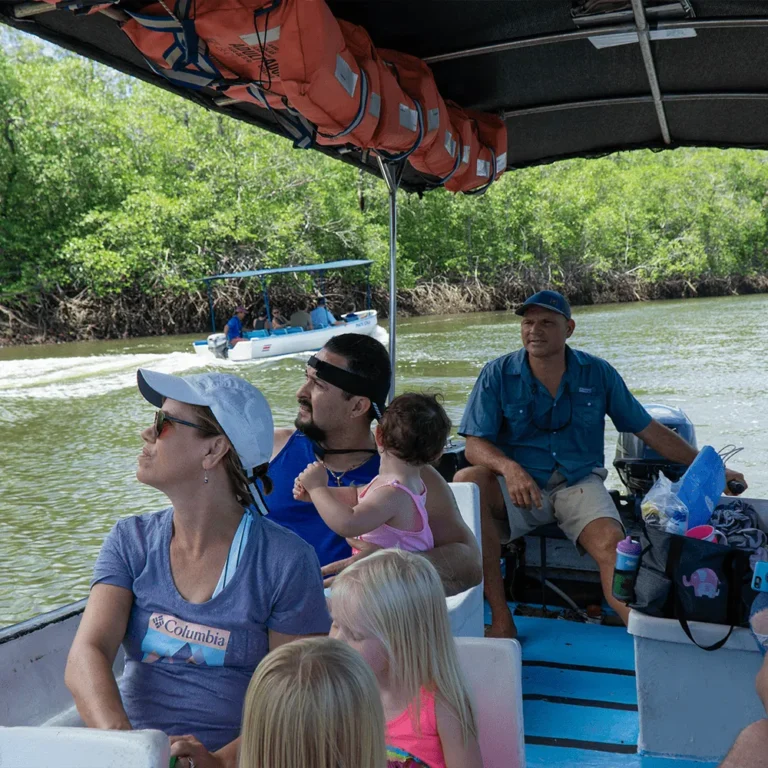
- Shared boat tour (mangrove safari): $40 per person, 2 hours, minimum 2 people. It combines the boat ride through the mangrove with a walk in the dry forest to look for howler monkeys, plus crocodiles, herons and iguanas along the way.
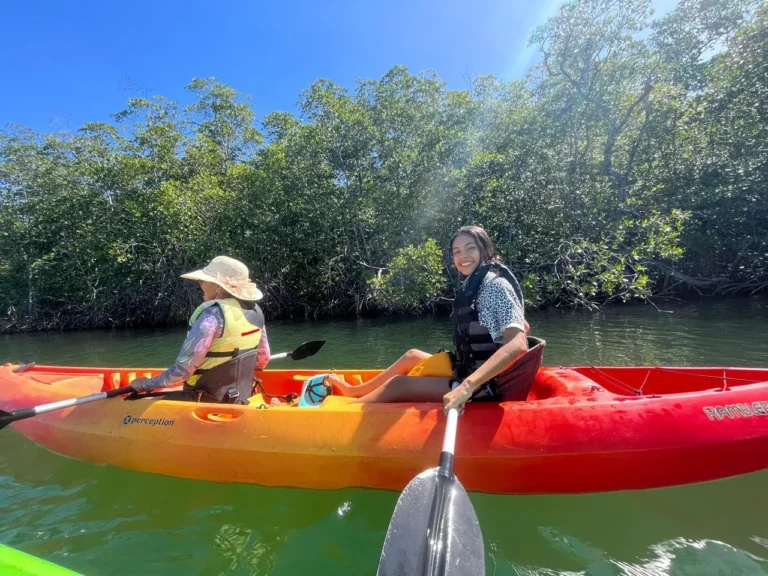
- Shared kayak tour: $60 per person, 2 to 2.5 hours, minimum 2 people. You paddle into the park with the tide and walk through the forest to see trees, crabs and monkeys.
- Private boat for up to 10 people: $800 per boat, 2 hours, with a bilingual naturalist guide who adapts the pace to your group, so you can spend more time with the monkeys.
If you also want to see sloths, read our guide to the sloth tour in Guanacaste. For everything else about the estuary, see the complete Tamarindo estuary guide.
What to bring
- Comfortable clothes and water shoes
- A hat, sunglasses and sunblock
- Insect repellent for the forest walk
- A camera with a zoom lens, or a phone, for photos in the treetops
Sightings depend on nature and cannot be guaranteed, but our local guides know the forest and the habits of the troops that live there.
Want to hear the roar of the howler monkeys in person? Book the shared boat tour or the kayak tour with Tamarindo Estuary Tours Mi Rey. You reserve online with a deposit and pay the balance on the day of the tour. If you have questions about the best date or time, write to us on WhatsApp and we will gladly help.
Book these tours
 Shared Boat Tour (Mangrove Safari)$40 per personSee tour and book →
 Shared Kayak Tour$60 per personSee tour and book →
 Private Boat Tour · up to 10 people$800 per boatSee tour and book →
Frequently asked questions
What kind of monkeys live in Tamarindo?
The monkey you are most likely to find around Tamarindo is the mantled howler monkey, known in Costa Rica as mono congo. White-faced capuchins also live in the forests of Guanacaste, but they are seen less often near the estuary.
Why do howler monkeys make such a loud noise?
The deep roar is how a troop marks its territory and keeps distance from other troops. It can be heard from far away, so you often hear howler monkeys long before you see them.
Can I feed or touch the monkeys?
No. Human food makes monkeys sick and teaches them to approach people, and feeding wild animals is not allowed in Costa Rica. Watch them from a distance and let them move freely.
Which tour is best for seeing monkeys in Tamarindo?
The shared boat tour includes a walk in the tropical dry forest of Las Baulas, where howler monkeys live. The kayak tour also stops for a forest walk inside the park. Sightings depend on nature and cannot be guaranteed.
Is it easier to see monkeys in the dry season?
Often, yes. From December to April many dry forest trees lose their leaves, so the troops are easier to spot in the branches. In the green season the forest is thicker, but the monkeys are still there and easy to hear.
More Tamarindo guides
- Tamarindo Estuary: Crocodiles, Tides and What to BringPlan your Tamarindo estuary tour: crocodiles, herons and howler monkeys in Las Baulas, why the tide sets the time, what to bring, and boat or kayak prices.
- Boat or Kayak? How to Choose Your Mangrove Tour in TamarindoTamarindo kayak tour or boat tour? Compare shared and private options by effort, wildlife, kids rules, tides and price, from $40 per person.
- Crocodile Tour in Tamarindo: Where and How to See Wild CrocodilesCrocodile tour in Tamarindo: where to see wild American crocodiles, how they behave, safety rules, the best tide and photo tips. Boat tours from $40.
- Tamarindo Mangrove Tour: Why the Mangrove Forest MattersTamarindo mangrove tour guide: the types of mangroves, why they are a nursery for fish and wildlife, and how to explore them by boat or kayak from $40.
- Wildlife in Tamarindo: Animals You Can See and WhereWildlife in Tamarindo: crocodiles, howler monkeys, iguanas, crabs, birds, sloths and sea turtles, with the tour, place and season to see each animal.
- Birdwatching in the Tamarindo Estuary: Birds You Can SeeBirdwatching in Tamarindo: herons, egrets, kingfishers, ospreys and spoonbills in the estuary, the best season and tide, tips for birders and which tour.