
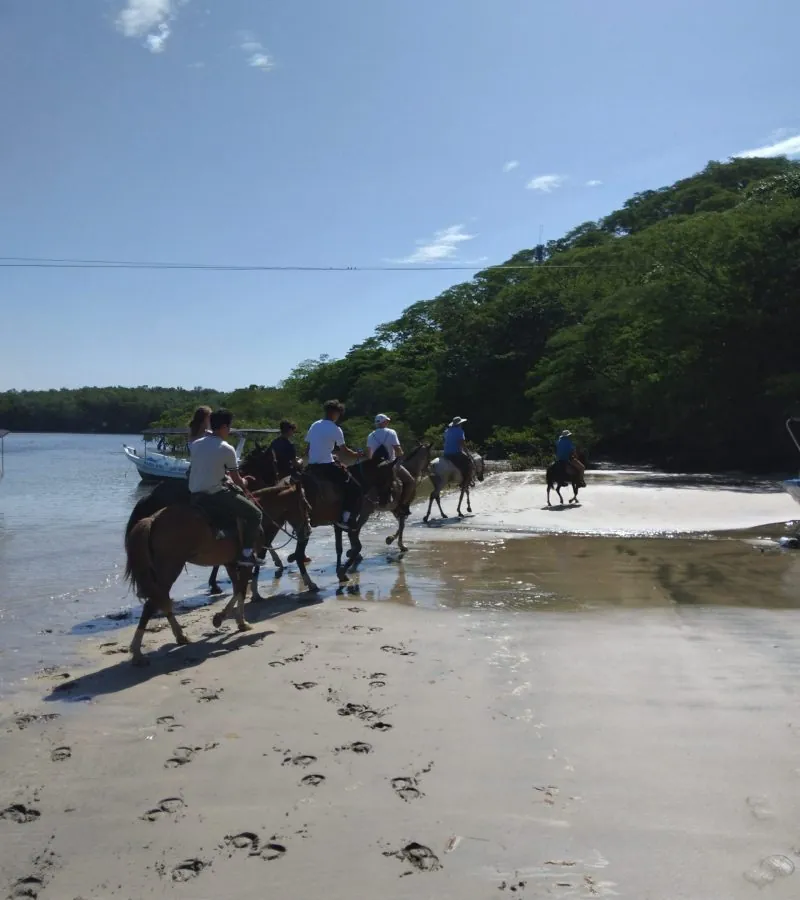
Horseback riding on the beach in Costa Rica is one of those experiences many travelers picture before they even book a flight: the Pacific on one side, warm sand under the hooves and a sky that turns gold in the late afternoon. We ride these trails and this beach every week in Tamarindo, Guanacaste. This guide shares what we have learned about where beach rides work best in Costa Rica, how to choose a responsible outfitter and what to expect on the day.
Short answer: the North Pacific province of Guanacaste is one of the best regions in Costa Rica for a beach ride, thanks to its ranching tradition, wide beaches and sunny dry season from December to April. With Tamarindo Estuary Tours Mi Rey, the guided ride lasts 1 hour, costs $50 per person (minimum 2) and goes from the estuary up to ocean viewpoints and then along the beach. No riding experience is needed.
Horseback riding on the beach in Costa Rica: where it works best
Costa Rica has two coastlines, and you will find beach rides on both. The Caribbean side is greener and wetter, with beaches backed by rainforest. The Pacific side, and Guanacaste in particular, has a drier climate, long open beaches and a landscape of pasture and tropical dry forest that suits riding very well.
For travelers coming from the United States or Canada, Guanacaste is also the most convenient region. Liberia International Airport (LIR) is about an hour to an hour and a half by road from Tamarindo, depending on traffic and stops, while flying into San José (SJO) means a much longer drive to the North Pacific beaches. Our guide on getting to Tamarindo from Liberia airport compares the options.
Why Guanacaste is horse country
Long before it was known for its surf towns, Guanacaste was cattle country. The sabanero, the Costa Rican cowboy, is a symbol of the province, and horses are still part of daily life on many farms. That culture shows in the riding: local horses are used to heat, sand and uneven trails, and many local guides grew up around them.
What a Costa Rica horseback tour on the beach is really like
Social media tends to show riders galloping through the surf. Guided rides for mixed groups are calmer, and that is a good thing for both riders and horses. Expect:
- A calm pace most of the time, set by the guide so the least experienced rider feels safe.
- A short briefing before you mount: how to hold the reins, how to stop and how much distance to keep from the horse in front.
- Mixed terrain: on our ride, forest trails and viewpoints first, then the sand.
- Sun and heat: the beach reflects light, so a hat that stays on and good sunblock matter more than you think.
If you are an experienced rider looking for long rides or open gallops, say so before booking any tour so expectations match. Our ride is designed for beginners and mixed groups.
How to choose a safe, responsible horseback ride in Guanacaste
Not every beach ride is run the same way. Before you book horseback riding in Guanacaste, look for these signs:
- Healthy horses: good body condition, clean equipment and saddles that fit.
- A guide who stays with the group from start to finish, instead of riders sent off on their own.
- Questions about your experience when you book, so each rider gets a suitable horse.
- Clear rules for children, including a minimum age to ride alone.
- Respect for the beach: on our rides, horses carry manure collection bags to keep the sand clean.
If you have back problems, are pregnant or have concerns about weight or mobility, ask before you book. A good operator will give you an honest answer rather than a sale.
Our beach ride in Tamarindo, step by step
- Booking and confirmation. After you book, we send the meeting details and confirm the time by WhatsApp.
- Meet your horse. The ride starts at the estuary. The guide adjusts the saddle and stirrups and explains the basic commands.
- Ride the trails. The group follows trails surrounded by nature up to viewpoints with panoramic views of the Pacific.
- Ride along the beach. The last part goes down to the sand, with the sea breeze, before returning to the starting point.
The Tamarindo horseback riding tour includes fresh bottled water and seasonal fruit. Riders 7 and older ride their own horse; younger children ride with an adult, and children from 0 to 3 do not pay. For more detail on experience level and clothing, read Tamarindo horseback riding: what to expect.
Add the mangrove on the same outing
If you want more than one landscape, the boat and horseback combo in Tamarindo ($80 per person, minimum 2) starts with pickup at your hotel, continues with the ride to the viewpoints and the beach, and finishes with a guided boat tour through the estuary of Las Baulas Marine National Park, home to crocodiles, iguanas, birds and monkeys. Its length depends on the tide.
Best time for a beach ride: season and time of day
- Dry season (December to April): sunny days, dry trails and the busiest months in Guanacaste. Book a few days ahead.
- Green season (May to November): greener hills, fewer visitors and afternoon showers, so mornings are usually the better choice.
- Time of day: early morning and late afternoon are cooler for riders and horses, and the light is softer for photos. The midday sun on the sand is intense.
Our guide to the best time to visit Tamarindo goes through the seasons month by month.
Practical tips for US and Canadian travelers
- Prices are in US dollars. Online you pay only the deposit: $15 per person for the ride and $20 per person for the combo. The balance is paid in cash, in dollars or colones, on the day of the tour.
- Cancellation: if you cancel at least 24 hours before departure, the deposit is refunded.
- Pack long pants. Shorts rub against the saddle, even on a 1-hour ride.
- Keep your phone secure in a zipped pocket or on a cross-body strap.
- Tipping is appreciated but never mandatory; see our guide to tipping on tours in Costa Rica.
Ready to ride? Book the Tamarindo horseback riding tour or the boat and horseback combo with Tamarindo Estuary Tours Mi Rey online, paying only the deposit. If you have questions about ages, experience or the best time for your dates, write to us on WhatsApp and we will gladly help.
Book these tours
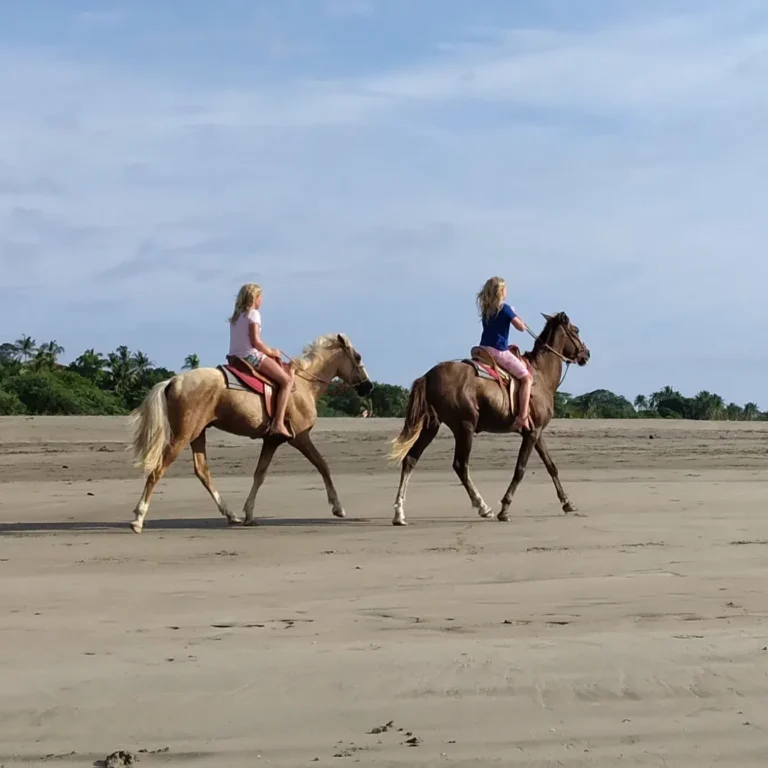 Horseback Riding Tour$50 per personSee tour and book →
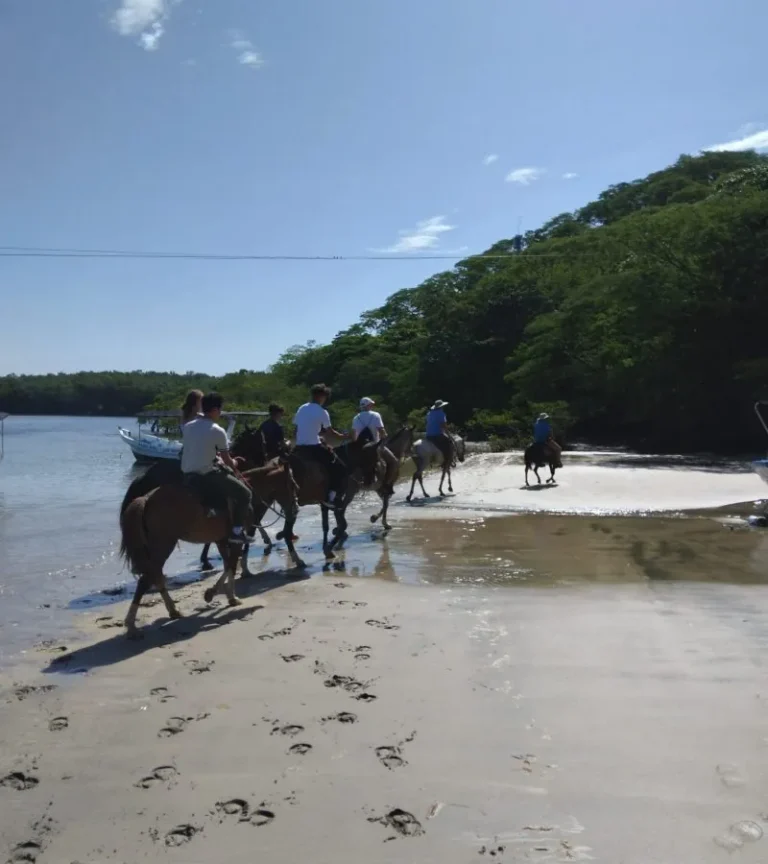 Estuary and Horseback Combo$80 per personSee tour and book →
Frequently asked questions
Where is the best place for horseback riding on the beach in Costa Rica?
Beach rides are offered on both coasts, but Guanacaste, on the North Pacific, is a natural choice: it has a long ranching tradition, wide beaches and a sunny dry season from December to April. In Tamarindo, our ride combines estuary trails, ocean viewpoints and the beach in 1 hour.
Is a Costa Rica horseback tour on the beach suitable for beginners?
Yes, if the ride is guided and the pace is set for the group. Our ride is designed for beginners and mixed groups, and the guide stays with the riders from start to finish. Tell us your experience when you book so we can assign the right horse.
What is the minimum age for horseback riding in Guanacaste with your company?
Riders from 7 years old ride their own horse, always with the guide. Children under 7 ride together with an adult, and children from 0 to 3 years old do not pay.
How much does a beach horseback ride in Tamarindo cost?
Our horseback riding tour costs $50 per person, minimum 2 people, and lasts 1 hour. Online you pay a $15 deposit per person, and the balance is paid in cash, in US dollars or colones, on the day of the tour.
Is it better to ride in the morning or in the afternoon?
Early morning and late afternoon are cooler for riders and horses, and the light is softer for photos. The midday sun on the sand is strong in Guanacaste, especially in the dry season. We confirm the time of your ride by WhatsApp after booking.
More Tamarindo guides
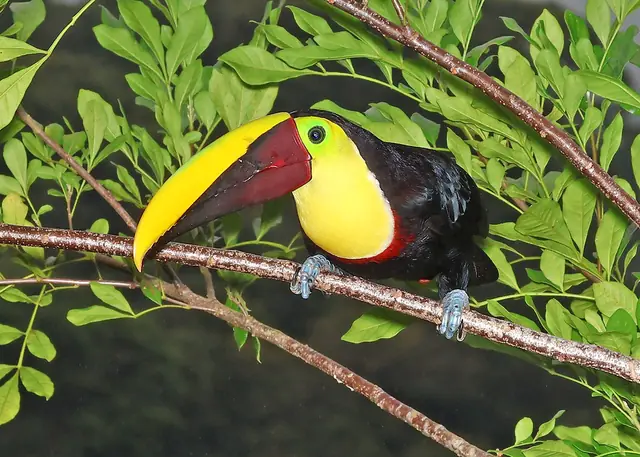 Costa Rica & GuanacasteCosta Rica Tours: Types by Region, How to Choose and Our Tours from TamarindoCosta Rica tours explained: main types by region, how to choose, booking direct vs packages, and our 13 tours from Tamarindo with real prices from $40.
 Costa Rica & GuanacasteThings to Do in Costa Rica: The Essentials and the Best of GuanacasteThings to do in Costa Rica: the essential experiences, ideas by month, with kids or for adults, and the best of Guanacaste with local tours from Tamarindo.
 Costa Rica & GuanacasteThings to Do in Guanacaste, Costa Rica: A Local Operator’s GuideThings to do in Guanacaste, Costa Rica: wildlife, volcanoes, waterfalls, beaches, turtles and culture, with kids or as a couple, plus tours from Tamarindo.
 Costa Rica & GuanacastePlaces to Visit in Guanacaste: National Parks, Beaches and TownsPlaces to visit in Guanacaste, Costa Rica: Rincón de la Vieja, Santa Rosa, Palo Verde, Las Baulas, Ostional, the best beaches and towns like Liberia and Nicoya.
 Costa Rica & GuanacasteBest Time to Visit Costa Rica: A Pacific Coast Guide by Season and GoalBest time to visit Costa Rica from Guanacaste: dry season vs green season and the best months for beaches, wildlife, sea turtles and a trip with kids.
 Costa Rica & GuanacasteCosta Rica Itinerary 10 Days: Volcanoes, Wildlife and a Guanacaste Beach BaseCosta Rica itinerary 10 days: a realistic route with a volcano region and six nights in Tamarindo, a 7-day Guanacaste version, tour prices and tips.