Las Baulas National Marine Park protects the Tamarindo estuary and the beaches just across the river from town, including Playa Grande, one of the best-known leatherback nesting beaches on the Pacific coast of Costa Rica. A Las Baulas National Park tour is the easiest way to experience it: by boat or kayak through the mangroves during the day, with a bilingual guide who knows the area. This guide from Tamarindo Estuary Tours Mi Rey explains what the park protects, which animals you can see and how to visit in a way that respects the wildlife.
What Las Baulas National Marine Park protects
The park takes its name from the baula, the Spanish word for the leatherback, the largest sea turtle in the world. It covers land and sea, and several connected ecosystems that depend on each other:
- The Tamarindo estuary and its mangroves. Where the river meets the ocean, the mangrove roots shelter young fish, crabs and many birds.
- Nesting beaches. Playa Grande and Playa Ventanas receive leatherbacks, and also green and olive ridley turtles.
- Tropical dry forest. Along the estuary grow trees typical of Guanacaste, such as the Guanacaste tree (the national tree of Costa Rica), the ceiba and the thorny cedar.
- The marine area. The waters in front of the beaches, where the turtles approach the shore to nest.
Wildlife you can see in the park
In the estuary and mangroves
The estuary is the part of the park most visitors see. From the boat or kayak you can often spot blue herons, tricolored herons and night herons, as well as hawks and fishing eagles. The American crocodile lives in the estuary, and iguanas and squirrels are common along the banks. Your guide will also explain how the mangrove works and why it matters for the coast.
In the dry forest
On the estuary tours we make a short walk inside the park. Howler monkeys are frequent here, together with crabs, parasitic plants, many flowers and the large trees of the dry forest.
On the nesting beaches
Leatherbacks nest from about October to February or March, with the most activity in December and January. For a month-by-month view, read our guide on the best time to see turtles in Guanacaste.
An honest note on the leatherback
The leatherback population that nests at Playa Grande has declined sharply in recent years, and the species is endangered. Today far fewer females come to these beaches than in the past, and a night on the beach can pass without seeing one. We prefer to say this clearly rather than promise something nature cannot guarantee.
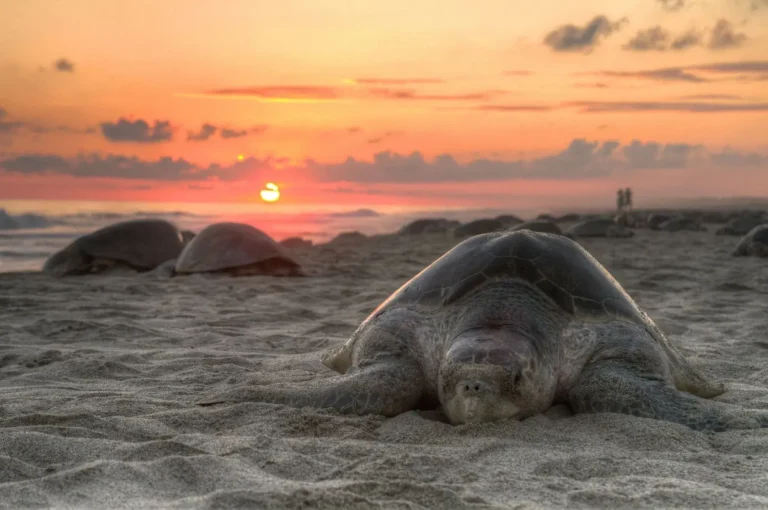
To protect the leatherback, the park stays closed at night during the nesting season. That is why our turtle nesting tour goes to Playa Minas or Playa Jesús, where we mostly see olive ridley and black turtles, sometimes hawksbills and, occasionally, leatherbacks. If we do not see turtles, we reschedule the tour for the next night or make it up to you with the estuary tour.
How to visit Las Baulas responsibly
During the day: the estuary by boat or kayak
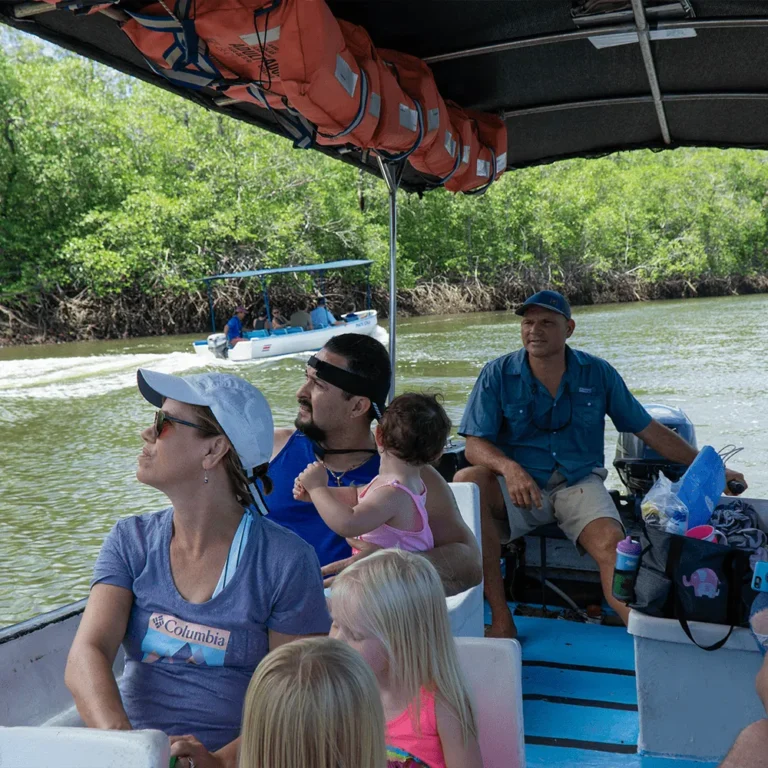
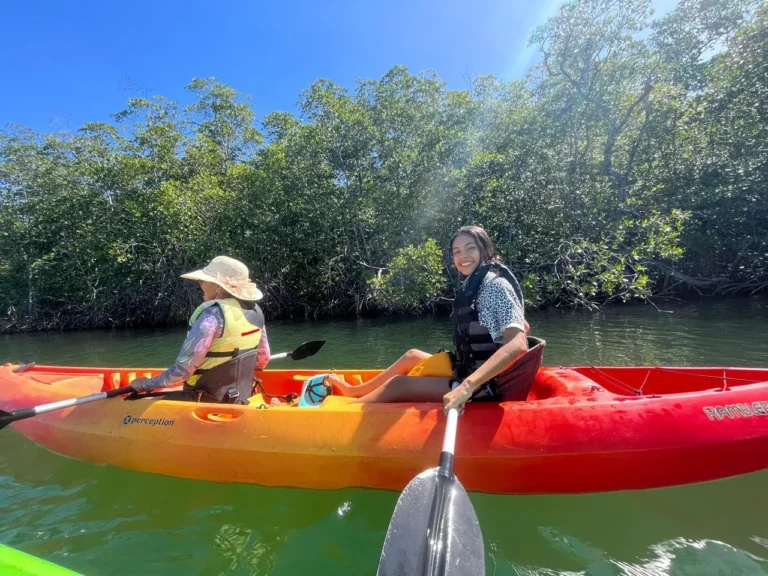
The shared boat tour is a 2-hour safari inside the park, with a bilingual guide, bottled water, seasonal fruit and transportation from Tamarindo or Langosta, for $40 per person. The shared kayak tour lasts 2 to 2.5 hours, costs $60 per person and is timed with the high tide so the current helps you paddle. Both include a walk in the dry forest. Not sure which one fits you? See boat or kayak in Tamarindo.
At night: rules on any nesting beach
Wherever you watch turtles, a few rules protect them and their nests:
- Go only with a guide and follow the guide’s instructions at all times.
- Wear dark clothing and use a camera without flash. White lights confuse turtles and hatchlings.
- Stay behind the turtle and keep your distance while she digs and lays her eggs.
- Do not touch turtles, eggs or hatchlings, and keep your voice low.
- Leave nothing on the beach and take all your trash with you.
General tips for the park
- Do not feed or approach animals, especially crocodiles and monkeys.
- Bring sunblock, repellent, a hat and water shoes for the boat and kayak.
Planning your Las Baulas National Park tour
Estuary tours run all year. Their departure time changes every day because the boat and kayak need the high tide to enter the mangrove channels; read Tamarindo tides to understand why. When you book, you pay a deposit online and the balance in cash, in US dollars or colones, on the day of the tour. If you cancel at least 24 hours in advance, we refund your deposit. For more about the estuary itself, see our Tamarindo estuary guide.
Ready to explore the park? Book the shared boat tour, the kayak tour or, in season, the turtle nesting tour with Tamarindo Estuary Tours Mi Rey. If you have questions about dates or tides, write to us on WhatsApp and we will help you plan.
Book these tours
 Shared Boat Tour (Mangrove Safari)$40 per personSee tour and book →
 Shared Kayak Tour$60 per personSee tour and book →
 Turtle Nesting Tour$60 per personSee tour and book →
Frequently asked questions
Can I visit Las Baulas National Marine Park on my own?
The estuary and mangroves are best visited on a guided boat or kayak tour, which takes you into the park with a bilingual guide. During the nesting season, the nesting beaches are closed at night to protect the leatherback turtle.
What animals can I see on a Las Baulas National Park tour?
In the estuary you can often see herons, hawks, fishing eagles, American crocodiles, iguanas and squirrels, and on the dry-forest walk, howler monkeys. Sightings depend on nature and cannot be guaranteed.
When is leatherback nesting season at Playa Grande?
Leatherbacks nest from about October to February or March, with the most activity in December and January. Their numbers have declined sharply in recent years, so sightings are rare.
Where does your turtle nesting tour take place?
Because the park stays closed at night during the season, our turtle nesting tour goes to Playa Minas or Playa Jesús. There we mostly see olive ridley and black turtles, sometimes hawksbills and, occasionally, leatherbacks.
Do estuary tours run all year?
Yes. Boat and kayak tours through the estuary run all year, and the departure time changes every day with the high tide. We confirm the exact time by WhatsApp after you book.
More Tamarindo guides
- Tamarindo Estuary: Crocodiles, Tides and What to BringPlan your Tamarindo estuary tour: crocodiles, herons and howler monkeys in Las Baulas, why the tide sets the time, what to bring, and boat or kayak prices.
- Boat or Kayak? How to Choose Your Mangrove Tour in TamarindoTamarindo kayak tour or boat tour? Compare shared and private options by effort, wildlife, kids rules, tides and price, from $40 per person.
- Crocodile Tour in Tamarindo: Where and How to See Wild CrocodilesCrocodile tour in Tamarindo: where to see wild American crocodiles, how they behave, safety rules, the best tide and photo tips. Boat tours from $40.
- Tamarindo Mangrove Tour: Why the Mangrove Forest MattersTamarindo mangrove tour guide: the types of mangroves, why they are a nursery for fish and wildlife, and how to explore them by boat or kayak from $40.
- Wildlife in Tamarindo: Animals You Can See and WhereWildlife in Tamarindo: crocodiles, howler monkeys, iguanas, crabs, birds, sloths and sea turtles, with the tour, place and season to see each animal.
- Birdwatching in the Tamarindo Estuary: Birds You Can SeeBirdwatching in Tamarindo: herons, egrets, kingfishers, ospreys and spoonbills in the estuary, the best season and tide, tips for birders and which tour.