When our kayaks enter the estuary on the high tide, most visitors see one dense green wall. Look closer and the mangrove trees of Tamarindo turn out to be a community of different species, each solving the same hard problems in its own way: salt, mud without oxygen and water that rises and falls twice a day.
This guide introduces the trees one by one, explains how they survive and shows how the whole ecosystem works, from fallen leaves to fish, birds and crocodiles. For the tour itself, prices and what to bring, see our Tamarindo mangrove tour guide.
Short answer: the main mangrove trees you can recognize in the Tamarindo estuary are red mangrove (stilt-like prop roots, at the water edge), black mangrove (pencil roots that stick up from the mud), white mangrove (on firmer ground) and buttonwood (at the edge of dry land). Together they shelter young fish, feed the food chain, protect the coast and store large amounts of carbon, which is why they are protected inside Las Baulas Marine National Park.
Mangrove trees of Tamarindo: how the forest is organized
Mangrove trees do not grow at random. Each species tends to occupy the band where it handles the conditions best, from the deepest, saltiest water to the first dry ground. In a typical pattern, moving from the channel inland, you find:
- Red mangrove along the channels, with its roots in the water.
- Black mangrove just behind, in mud that floods with each high tide.
- White mangrove on slightly higher, firmer ground.
- Buttonwood at the transition, where the mangrove meets the tropical dry forest.
Real mangroves are messier than this list, and the bands often mix, but the pattern helps you read the forest from the boat or the kayak.
Red mangrove (mangle rojo)
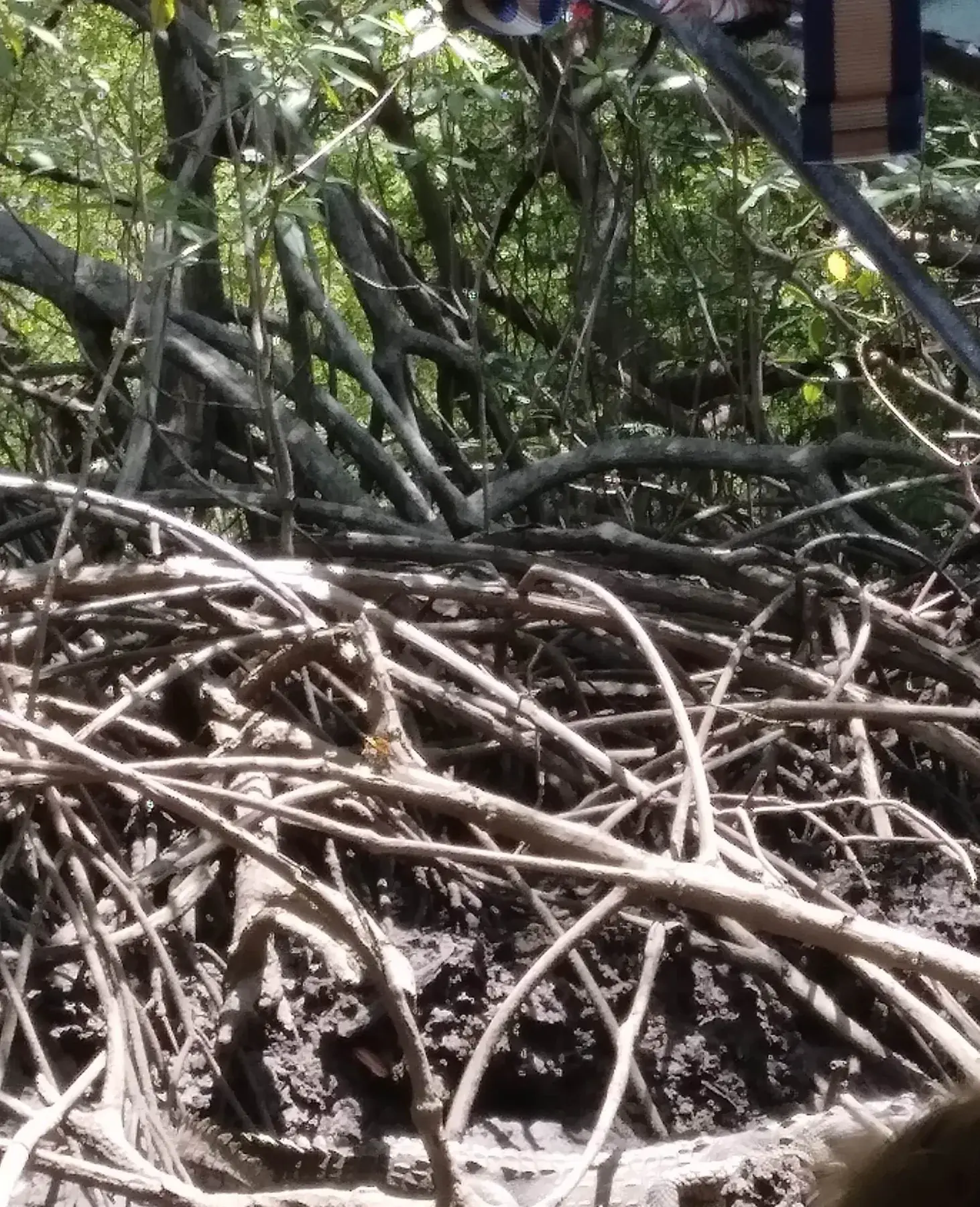
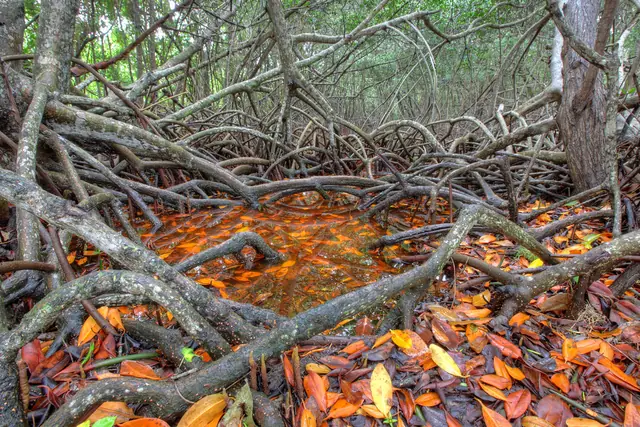
The red mangrove is the icon of the estuary. Its arching prop roots grow from the trunk and branches down into the water, like stilts, and some roots drop straight from the branches. These roots hold the tree in soft mud and are covered with tiny pores that let air reach the submerged parts.
- Leaves: thick, glossy and dark green on top, lighter underneath.
- Salt strategy: its roots filter out most of the salt before the water enters the tree.
- Seedlings: long, green, cigar-shaped propagules hang from the branches. They begin to grow while still on the tree, then drop into the mud or float away with the tide to colonize new banks.
- Bark: the inner bark is reddish and rich in tannins, which gives the tree its name.
Black mangrove (mangle negro or salado)
The easiest clue is on the ground: hundreds of thin, pencil-like roots called pneumatophores stick up out of the mud around the tree. They work like snorkels, taking in air when the soil is flooded and has almost no oxygen.
- Leaves: narrow, often grayish or pale underneath.
- Salt strategy: it lets salt in and then releases it through its leaves. On dry days you may notice tiny salt crystals on them, which explains the local name mangle salado.
- Bark: dark, which gives the black mangrove its name.
A tip from the water: tours enter with the high tide, when many pencil roots are covered. Look for them on the slightly higher mud banks, where they stick out like a field of small sticks.
White mangrove (mangle blanco or mariquita)
The white mangrove grows a little farther from the channel, where the ground is firmer and floods less often. It usually lacks the dramatic roots of the other two, although in wetter spots it can develop short breathing roots.
- Leaves: oval, rounded at the tip, fleshy and lighter green, growing in opposite pairs.
- A small detail: two tiny glands at the base of each leaf, which help it get rid of salt. Ask your guide to show you.
Buttonwood (botoncillo)
Buttonwood grows at the landward edge, where the tide reaches only occasionally. Botanists often call it a mangrove associate rather than a true mangrove, but it is part of the same community. Its name comes from its small, round, button-like fruit clusters. Where buttonwood ends, the tropical dry forest begins, and that is where the estuary tours stop for their forest walk. Learn about that habitat in our guide to the tropical dry forest of Guanacaste.
Three problems, many solutions
- Salt: some mangroves block it at the roots, others excrete it through the leaves, and some store it in older leaves that later fall.
- No oxygen in the mud: prop roots, pencil roots and pores in the bark let the roots breathe.
- Soft ground and moving water: wide root systems anchor the trees, and floating seedlings use the tide to spread.
How the mangrove ecosystem works
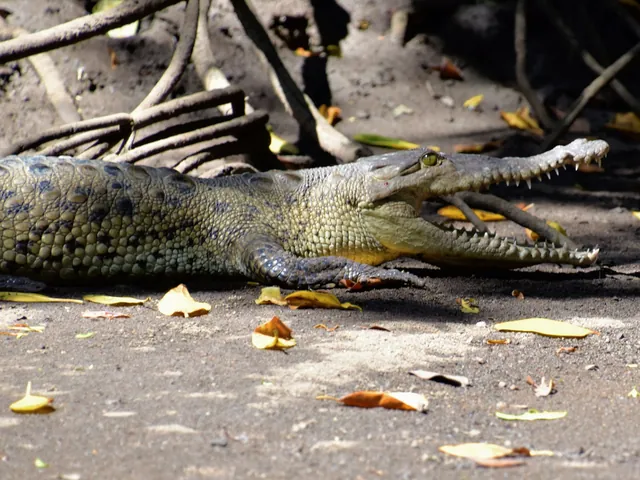
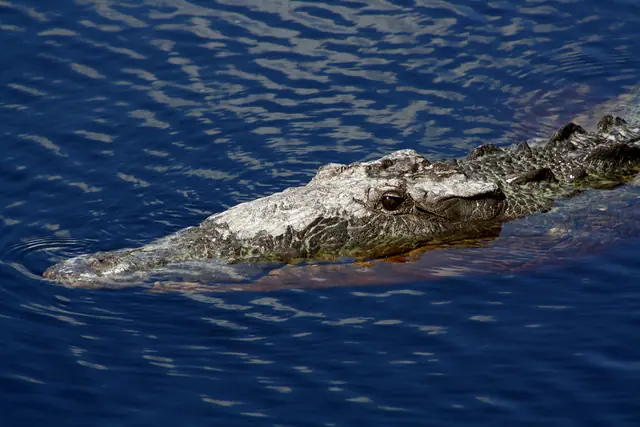
A mangrove is a food factory. Leaves fall into the water and mud, where fungi and bacteria break them down. That material feeds crabs, shrimp, snails and small fish. These in turn feed larger fish, herons, kingfishers and the American crocodile. Read more about the top predator of the estuary in our American crocodile facts guide, and about its birds in our guide to birdwatching in Tamarindo.
- Nursery for the sea: the tangle of roots shelters young fish and shrimp from predators until they are big enough for open water.
- Natural filter: roots trap sediment and help keep the water that reaches the beach cleaner.
- Coastal defense: dense roots reduce erosion and soften the force of high water during storms.
- Carbon store: mangrove soils accumulate carbon over centuries. Scientists call it blue carbon, and per hectare mangroves can store more of it than many land forests.
Why the mangroves of Tamarindo are protected
Around the world, mangroves have been cleared for aquaculture, ports, roads and buildings. In Costa Rica they are protected wetlands, and cutting, filling or draining them is not allowed. In Tamarindo they also lie inside Las Baulas Marine National Park, together with the beaches where sea turtles nest. Today the most visible threats here are plastic and other trash carried by rivers and tides, which is why every visitor can help simply by taking their waste back with them.
Tamarindo mangrove tour: how to see the trees up close
The mangrove grows on soft, flooded mud, so it is explored from the water, and tours enter the channels with the high tide. Because the tide arrives a little later each day, the departure time changes and we confirm it by WhatsApp after you book.
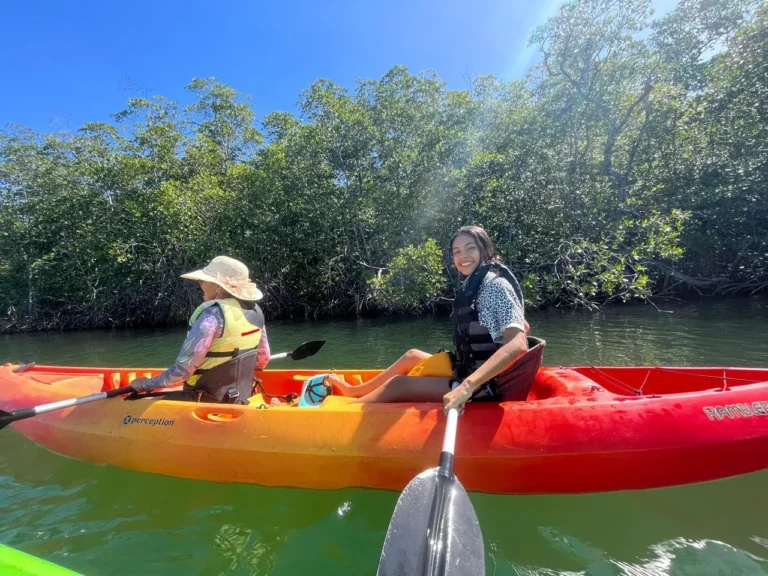
- Kayak, closest to the roots: the shared Tamarindo kayak tour costs $60 per person, lasts 2 to 2.5 hours and needs a minimum of 2 people.
- Kayak at your own pace: the private kayak tour ($100 per person, about 2.5 hours) lets you stop as long as you like at each tree.
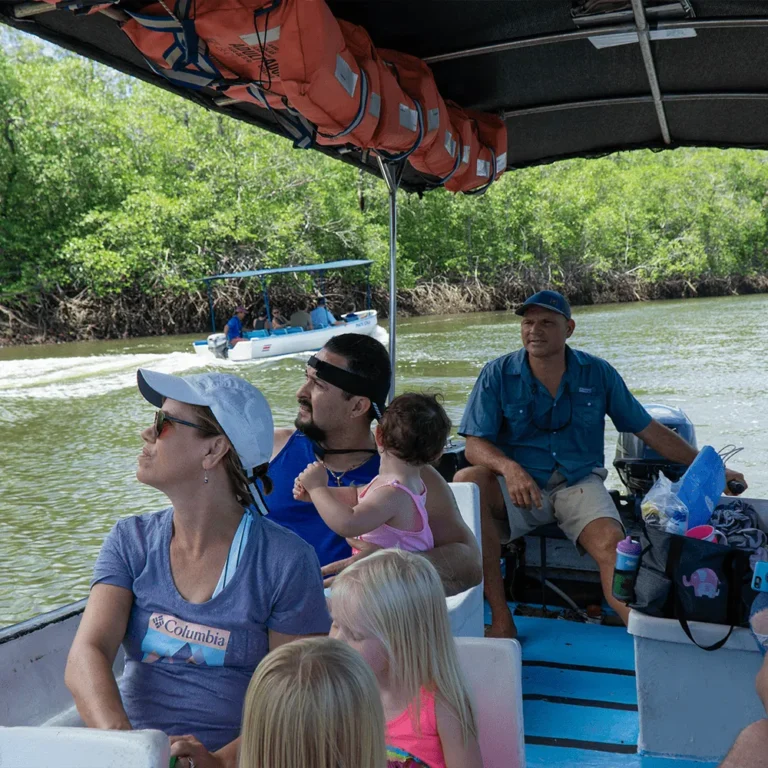
- Boat, no paddling: the shared Tamarindo boat tour ($40 per person, 2 hours) covers more of the estuary.
All include a bilingual guide and a short walk in the dry forest. First time paddling? Read our Tamarindo kayak tour tips.
Ready to meet the mangrove trees of Tamarindo? Book the kayak mangrove tour in Tamarindo or the Tamarindo estuary tour by boat with Tamarindo Estuary Tours Mi Rey online with a $15 deposit per person, and pay the balance on the day of the tour. If you have questions about the tide on your date, write to us on WhatsApp.
Book these tours
 Shared Kayak Tour$60 per personSee tour and book →
 Shared Boat Tour (Mangrove Safari)$40 per personSee tour and book →
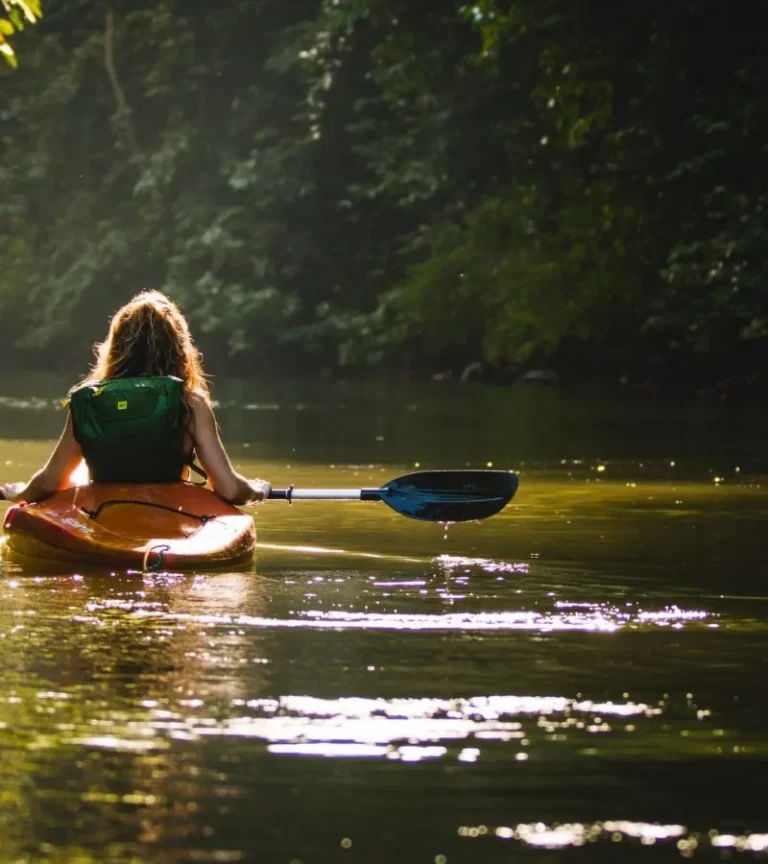 Private Kayak Tour$100 per personSee tour and book →
Frequently asked questions
How many types of mangrove are there in Costa Rica?
Costa Rica has several mangrove species, and most of its mangrove forests are on the Pacific coast. Around Tamarindo the ones you are most likely to recognize are red, black and white mangrove, with buttonwood at the landward edge.
What are the long green pods hanging from red mangrove trees?
They are propagules, young plants that start growing while still attached to the tree. When they drop, they can root in the mud below or float with the tide until they reach a new place to grow.
Is it legal to cut mangroves in Costa Rica?
No. Mangroves are protected wetlands under Costa Rican law, and cutting, filling or draining them is not allowed. In Tamarindo they are also inside Las Baulas Marine National Park.
What is blue carbon?
Blue carbon is the carbon stored by coastal ecosystems such as mangroves, seagrass meadows and salt marshes, mostly in their waterlogged soils. When a mangrove is destroyed, much of that stored carbon can be released.
Is the boat or the kayak better for seeing the mangrove trees of Tamarindo?
The kayak takes you closest to the roots and is the best option if the trees themselves interest you. The boat covers more of the estuary and is more comfortable for people who prefer not to paddle.
More Tamarindo guides
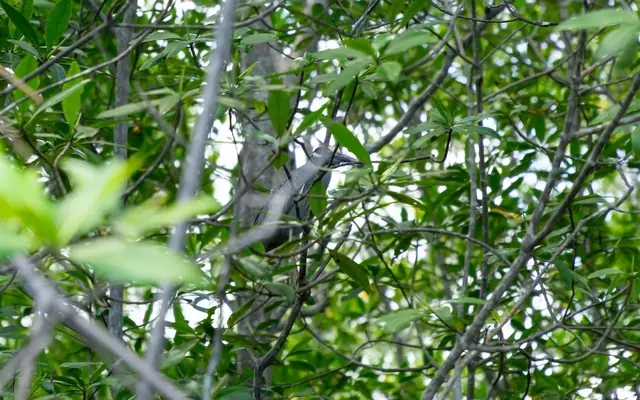 Estuary, mangroves and wildlifeTamarindo Estuary: Crocodiles, Tides and What to BringPlan your Tamarindo estuary tour: crocodiles, herons and howler monkeys in Las Baulas, why the tide sets the time, what to bring, and boat or kayak prices.
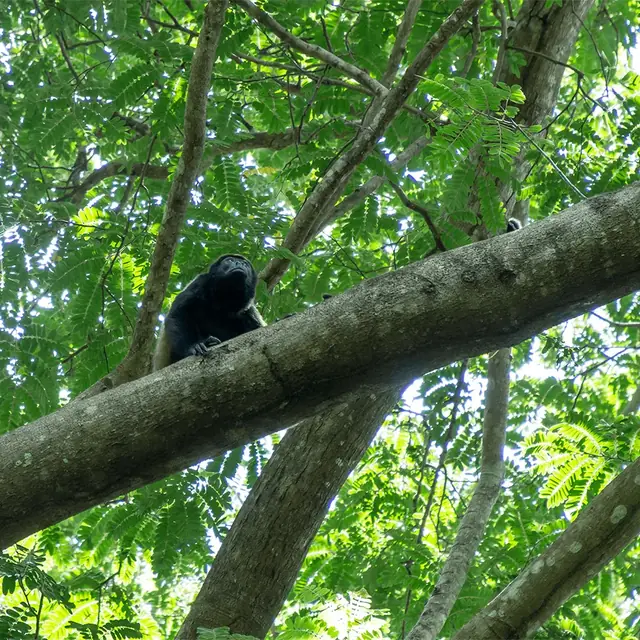 Estuary, mangroves and wildlifeNature Tours in Tamarindo: Estuary, Turtles, Forest and WaterfallsNature tours in Tamarindo: estuary boat and kayak tours, turtle nesting and releases, sloths, waterfalls and volcanoes, with prices, durations and seasons.
 Estuary, mangroves and wildlifeBoat or Kayak? How to Choose Your Mangrove Tour in TamarindoTamarindo kayak tour or boat tour? Compare shared and private options by effort, wildlife, kids rules, tides and price, from $40 per person.
 Estuary, mangroves and wildlifeCrocodile Tour in Tamarindo: Where and How to See Wild CrocodilesCrocodile tour in Tamarindo: where to see wild American crocodiles, how they behave, safety rules, the best tide and photo tips. Boat tours from $40.
 Estuary, mangroves and wildlifeAmerican Crocodile Facts: Meet the Crocodile of the Tamarindo EstuaryAmerican crocodile facts: how big it gets, what it eats, how it lives in salt water, how to tell it from a caiman and where to see one near Tamarindo.
 Estuary, mangroves and wildlifeTamarindo Mangrove Tour: Why the Mangrove Forest MattersTamarindo mangrove tour guide: the types of mangroves, why they are a nursery for fish and wildlife, and how to explore them by boat or kayak from $40.