Ask our guides which question they hear most on the estuary and the answer is easy: “How big does that crocodile get?” This page collects the American crocodile facts that visitors ask about on board, from size and diet to salt water, nesting and the difference with a caiman. It is about the animal itself, the largest reptile in Costa Rica.
If you are planning the outing, our crocodile tour Tamarindo guide covers safety on board, the best tide and photo tips.
Short answer: the American crocodile (Crocodylus acutus) is a large, shy reptile of estuaries and mangroves. Adult males commonly reach 3 to 4 meters (10 to 13 feet), it eats mainly fish, it tolerates salt water thanks to glands on its tongue and it is listed as Vulnerable. Near Tamarindo, the best place to see one in the wild is the Tamarindo estuary, inside Las Baulas Marine National Park.
American crocodile facts: name and range
The scientific name is Crocodylus acutus, which refers to its pointed snout. In Costa Rica it is simply called cocodrilo, and locals sometimes use the word lagarto. The species lives from southern Florida and the Caribbean islands through Mexico and Central America to northern South America, on both the Atlantic and the Pacific sides. In Costa Rica it is found in rivers, estuaries, lagoons and mangroves on both coasts.
How big does the American crocodile get?
- Adult males: commonly 3 to 4 meters long, and exceptional individuals grow larger. Big males can weigh several hundred kilograms.
- Adult females: noticeably smaller and lighter than males.
- Hatchlings: only about 25 centimeters (10 inches) long when they leave the egg.
Crocodiles keep growing for much of their lives, but growth slows down with age. How fast they grow depends on food and temperature, so two crocodiles of the same length can be of very different ages. It is also a long-lived reptile: wild crocodiles can live for several decades, although their exact age is hard to measure.
How to recognize an American crocodile
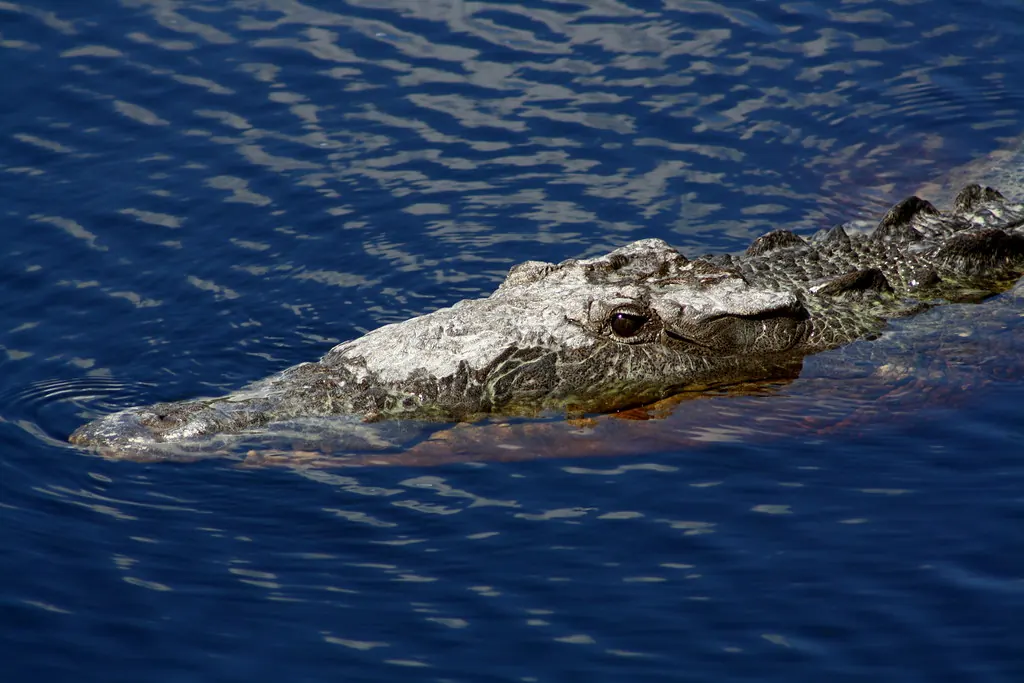
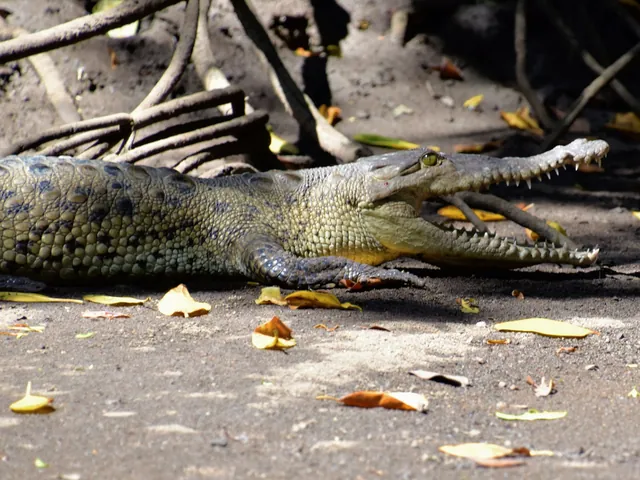
- A long, narrow snout that tapers toward the tip, narrower than that of most other crocodiles.
- A hump in front of the eyes, a raised area on the snout that is easy to see on large adults.
- Olive to grayish-brown skin. Young crocodiles are lighter, with dark bands on the body and tail.
- Visible lower teeth when the mouth is closed, including a large fourth tooth on each side. This is a typical trait of true crocodiles.
A crocodile that tolerates salt water
Few crocodiles handle salt water as well as this one. Like other true crocodiles, it has glands on the tongue that release excess salt, which allows it to live in brackish water and even to swim along the coast between estuaries. It still needs fresh water to drink, from rain and rivers, which is why estuaries are ideal: they offer both.
This ability explains why crocodiles are occasionally seen at river mouths or close to beaches. Near Tamarindo, the practical rule is simple: do not swim in the estuary or near the river mouth.
What does the American crocodile eat?
Its diet changes with size. Young crocodiles eat insects, small crabs, tadpoles and small fish. Adults feed mainly on fish, and also take crabs, birds, turtles and small mammals when they have the chance. It is an ambush predator: it waits quietly in the water and strikes when prey comes close. Because it is cold-blooded and has a slow metabolism, it can go a long time between meals.
Crocodiles hunt mostly at dusk and at night. During the day they are usually resting, which is why daytime visitors see calm animals rather than hunting scenes.
Behavior: what crocodiles do all day
- Basking. They lie on muddy banks to warm up, often with the mouth open. This gaping helps them release heat and is not a sign of aggression.
- Floating. Only the eyes, nostrils and the top of the back stay above the surface.
On the estuary, our guides know the banks where crocodiles usually rest. On morning tides, when the sun has just reached the mud, they often find them basking there. As the water rises, many slip into the channel, so the hour and the height of the tide change what you see from one day to the next.
Nesting and young crocodiles
Females nest during the dry season. They dig a hole in a sandy or muddy bank and lay a few dozen eggs, which incubate for about three months. As in other crocodiles, the temperature of the nest decides whether the young will be male or female. The hatchlings call from inside the eggs with high-pitched chirps, and the mother may open the nest and help them reach the water. Most young crocodiles do not survive their first years: herons, fish and even larger crocodiles eat them.
Crocodile vs caiman
Many visitors ask whether they saw a crocodile or a caiman. Costa Rica has both, but they look and live differently:
- Size: the American crocodile is much larger; the spectacled caiman usually stays under about 2 meters.
- Snout: narrow and pointed in the crocodile; broader and rounder in the caiman.
- Face: the caiman has a bony ridge between the eyes that looks like the bridge of a pair of glasses, which gives it its name.
- Teeth: in the crocodile, lower teeth show when the mouth is closed; in the caiman they are mostly hidden.
- Water: the crocodile tolerates salt water; the caiman prefers fresh water.
In the brackish Tamarindo estuary, the reptile you see is the American crocodile.
Why the American crocodile is protected
During the twentieth century, hunting for its skin reduced many populations across its range. Today the IUCN lists the species as Vulnerable, international trade is strictly regulated and it is protected under Costa Rican wildlife law. Its main threats now are the loss of mangroves and wetlands, pollution and conflicts with people, often caused by feeding.
As a top predator, the crocodile helps keep fish populations healthy and is part of the balance of the mangrove. Learn how that ecosystem works in our guide to the mangrove trees of Tamarindo.
Where to see crocodiles in Tamarindo: the estuary boat tour
The Tamarindo estuary, a few minutes from the beach, is part of Las Baulas Marine National Park, and crocodiles live there all year. The shared Tamarindo estuary tour by boat ($40 per person, 2 hours, minimum 2 people) is the best way to see them from a safe distance, with a bilingual guide who knows where they usually rest. Groups can reserve a private boat tour in Tamarindo for up to 10 people ($800 per boat). Boat tours leave with the high tide, so the departure time changes every day; our guide to Tamarindo tides explains why. Sightings are frequent but, as with any wild animal, they cannot be guaranteed.
To see what else lives in the estuary, from herons to howler monkeys, see our guide to the wildlife tour in Tamarindo.
Would you like to see the American crocodile in its natural habitat? Book the Tamarindo boat tour with Tamarindo Estuary Tours Mi Rey online with a deposit of $15 per person and pay the balance on the day of the tour, or write to us on WhatsApp to ask about the tide on your date.
Book these tours
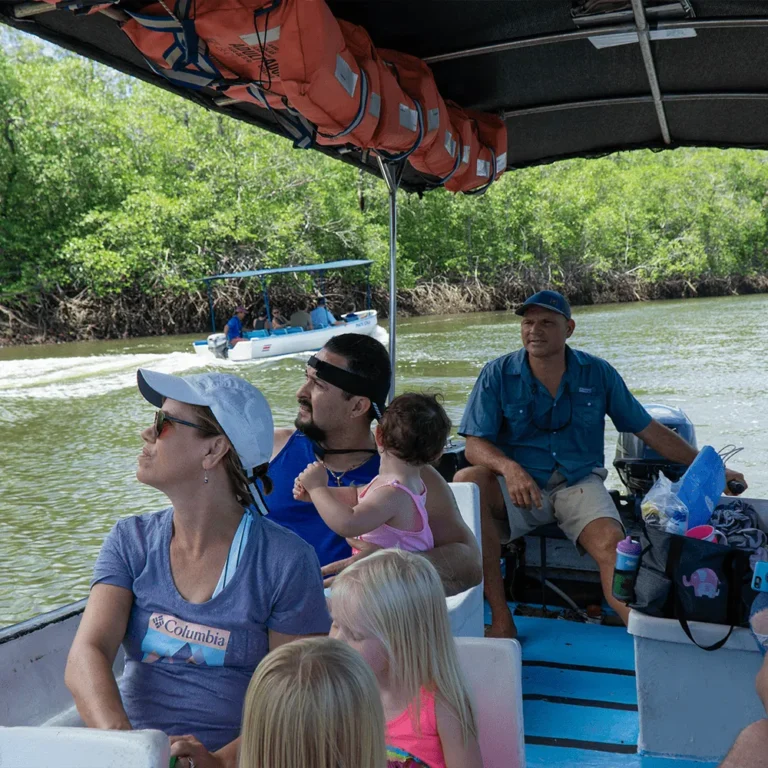 Shared Boat Tour (Mangrove Safari)$40 per personSee tour and book →
 Private Boat Tour · up to 10 people$800 per boatSee tour and book →
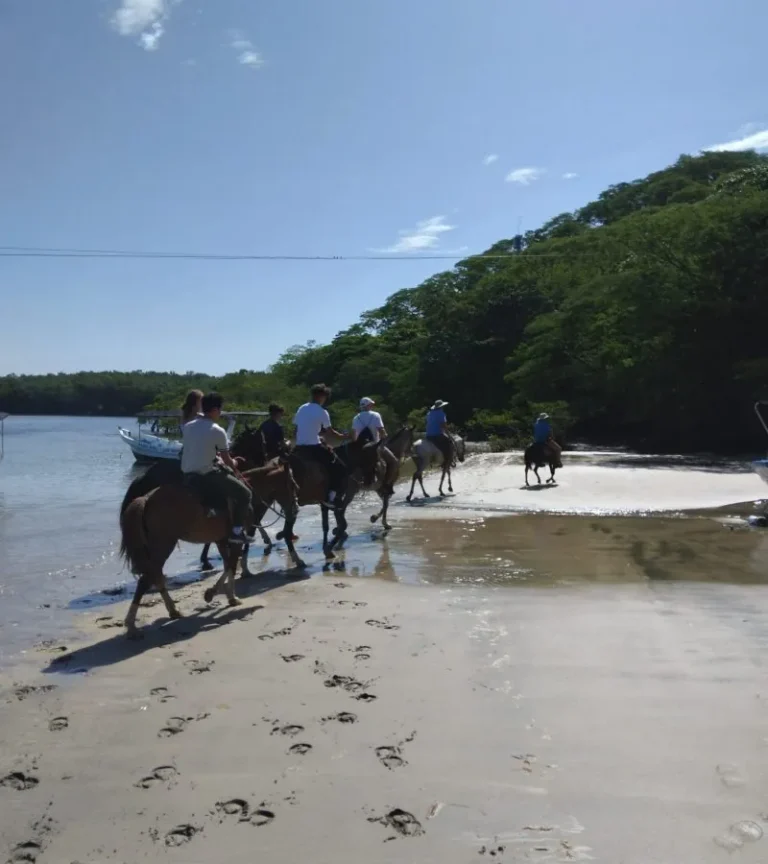 Estuary and Horseback Combo$80 per personSee tour and book →
Frequently asked questions
Is the American crocodile dangerous to people?
It is a large predator and deserves respect, but it is generally shy and avoids people. Most problems happen when crocodiles have been fed or when people swim where they live, so keep your distance and never feed them.
Can American crocodiles live in the ocean?
It tolerates salt water better than most crocodiles thanks to salt glands on its tongue, and it is sometimes seen near river mouths and beaches. Even so, it prefers brackish estuaries and mangroves, where it also has access to fresh water.
What are the key American crocodile facts to know before a tour?
It is the largest reptile in Costa Rica, adult males commonly measure 3 to 4 meters, it eats mainly fish and it rests by day and hunts at dusk and at night. It is shy and protected, so it is watched from the boat and never fed.
Is the American crocodile an endangered species?
The IUCN lists it as Vulnerable. Hunting for its skin reduced many populations in the twentieth century; today it is protected in Costa Rica, and habitat loss and conflict with people are its main threats.
Crocodile or caiman: which one lives in the Tamarindo estuary?
The reptile you see in the brackish Tamarindo estuary is the American crocodile. The spectacled caiman is smaller, prefers fresh water and is more typical of freshwater rivers and wetlands in other parts of Costa Rica.
More Tamarindo guides
 Estuary, mangroves and wildlifeTamarindo Estuary: Crocodiles, Tides and What to BringPlan your Tamarindo estuary tour: crocodiles, herons and howler monkeys in Las Baulas, why the tide sets the time, what to bring, and boat or kayak prices.
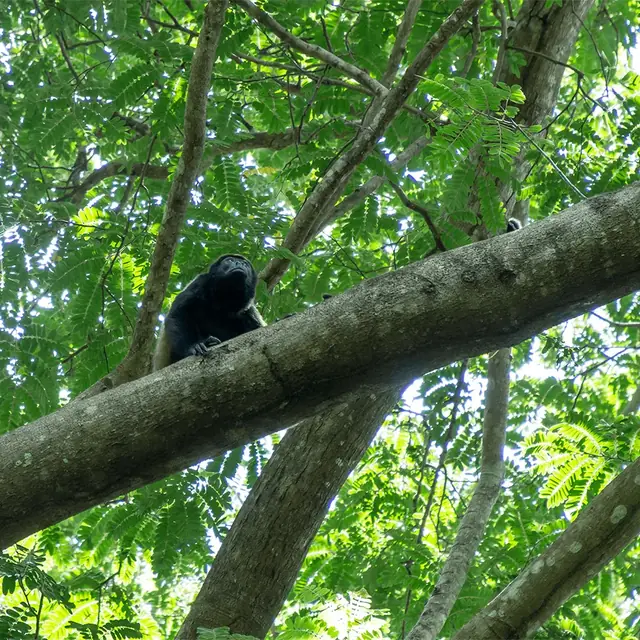 Estuary, mangroves and wildlifeNature Tours in Tamarindo: Estuary, Turtles, Forest and WaterfallsNature tours in Tamarindo: estuary boat and kayak tours, turtle nesting and releases, sloths, waterfalls and volcanoes, with prices, durations and seasons.
 Estuary, mangroves and wildlifeBoat or Kayak? How to Choose Your Mangrove Tour in TamarindoTamarindo kayak tour or boat tour? Compare shared and private options by effort, wildlife, kids rules, tides and price, from $40 per person.
 Estuary, mangroves and wildlifeCrocodile Tour in Tamarindo: Where and How to See Wild CrocodilesCrocodile tour in Tamarindo: where to see wild American crocodiles, how they behave, safety rules, the best tide and photo tips. Boat tours from $40.
 Estuary, mangroves and wildlifeTamarindo Mangrove Tour: Why the Mangrove Forest MattersTamarindo mangrove tour guide: the types of mangroves, why they are a nursery for fish and wildlife, and how to explore them by boat or kayak from $40.
 Estuary, mangroves and wildlifeMangrove Trees of Tamarindo: Species, Roots and How the Ecosystem WorksMangrove trees of Tamarindo: how to identify red, black and white mangrove and buttonwood, how they survive salt, and why they feed the sea and store carbon.