
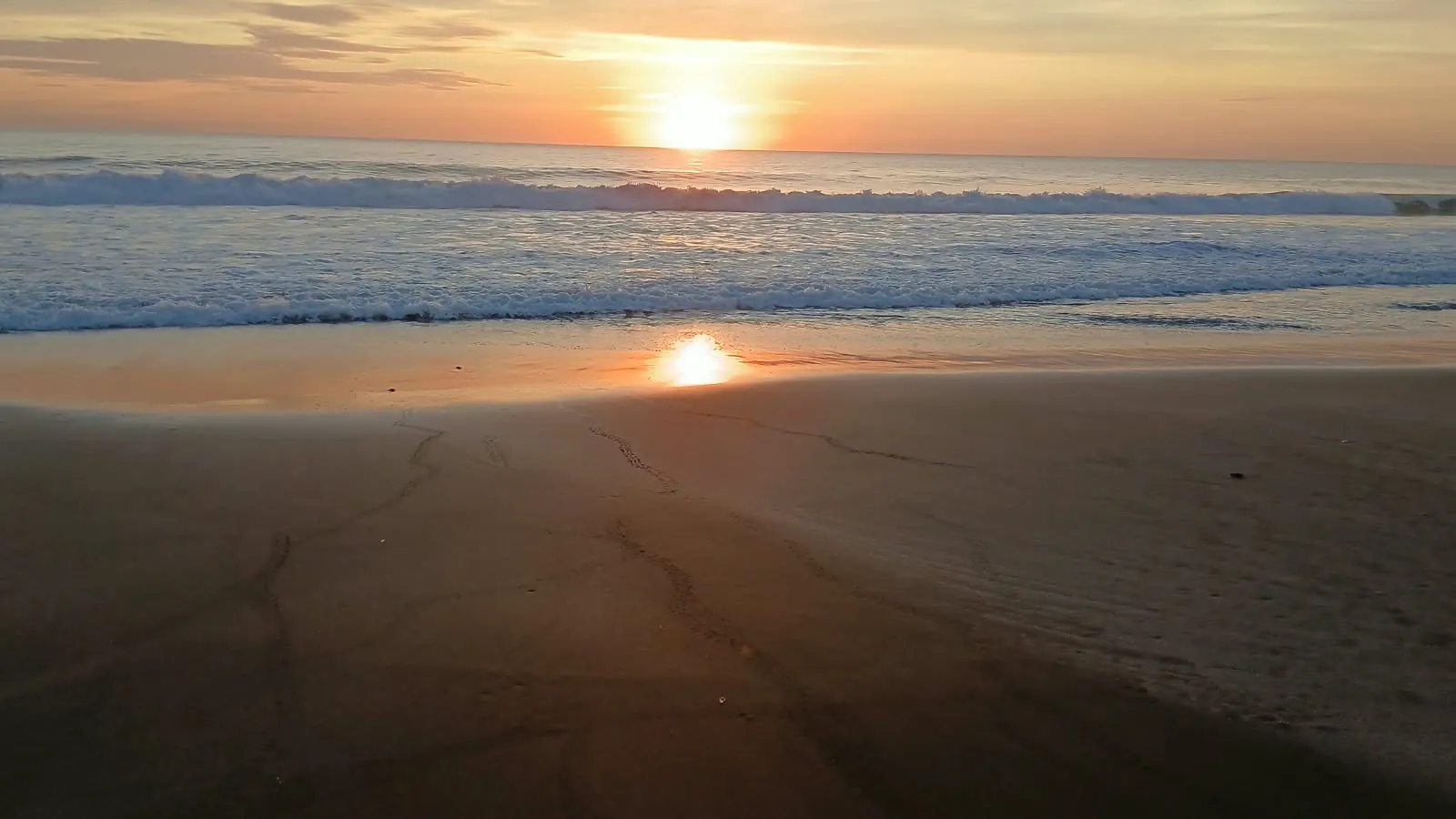
Every morning, on the way to the estuary for the high tide, our guides see the same scene on Tamarindo beach: surf students carrying soft boards to the water, early walkers heading south toward the rocks and herons fishing at the river mouth. This long, west-facing beach in front of town is the heart of Tamarindo. It is also a real ocean beach, with tides, currents and a river mouth where crocodiles live.
Short answer: Tamarindo beach is good for learning to surf, walking, tide pools and sunsets, and suitable for swimming in calm conditions. Swim where other people are swimming, learn to spot rip currents, do not assume a lifeguard is on duty and never swim near the estuary mouth at the north end, where American crocodiles live.
Tamarindo beach from north to south
The beach changes along its length. Knowing its three sections helps you choose where to spend your day.
The north end and the estuary mouth
At the north end, the Tamarindo estuary meets the ocean, and across the water lies Playa Grande, part of Las Baulas Marine National Park. From our boats we regularly see crocodiles resting on the banks just inside the mouth, which is why this is the one area where you should not swim or wade at all.
The current there also becomes strong when the tide changes. Watching from dry sand is fine, but keep children and pets well back from the edge. To see the estuary up close, do it from a boat with a guide; our guide to the Tamarindo estuary tour explains what lives there.
The center, in front of town
The central part of the beach is the busiest. Surf schools give lessons here, and when the swell is small the waves are often gentle enough for beginners.
You also find shade under the trees, board rentals and the most people in the water. That alone is a good reason to swim here rather than on an empty stretch.
The south end, toward Langosta
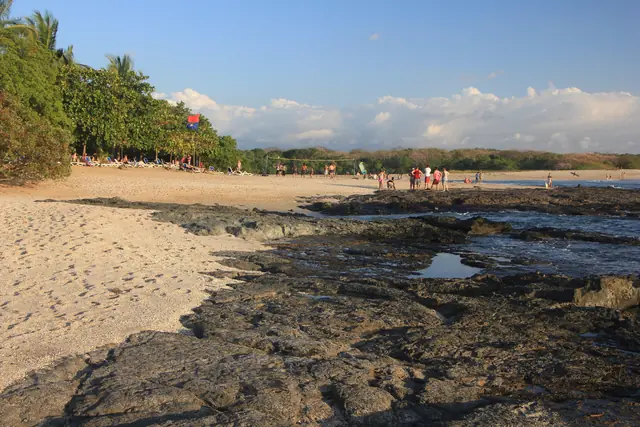
Toward the south, the beach becomes quieter and rockier. At low tide the rocks reveal tide pools, and around the point lies Playa Langosta, a calmer beach many people reach on a morning walk. Read more in our Playa Langosta guide.
Swimming in Tamarindo: currents and common sense
Tamarindo is an open Pacific beach, so conditions change with the tide, the swell and the season. A spot that is calm at 8 am can have bigger waves by mid-afternoon.
- Do not count on lifeguards. Coverage on Costa Rican beaches can be limited and can change, so keep an eye on your own group.
- Swim with company and stay where you can stand if you are unsure.
- Respect warning flags or signs if you see them, and ask surf instructors about conditions; they watch the water all day.
- Skip the water after drinking alcohol and never swim at night.
How to recognize and escape a rip current
- Before going in, look for a channel of darker, calmer-looking water between breaking waves, or foam moving out to sea. Do not swim there.
- If a current pulls you out, do not swim against it. Stay calm and float.
- Swim parallel to the shore until you feel the pull weaken.
- Come back in at an angle, using the waves. Raise an arm and call for help if you need it.
Surfing on Tamarindo beach
Tamarindo is one of the best-known places in Costa Rica to learn to surf, because the central beach often has soft, rolling waves. More experienced surfers look for stronger waves nearby; Playa Grande, across the estuary, usually has more power.
If you are a beginner, take a lesson with a certified instructor, use a soft board and stay clear of experienced surfers in the lineup. Conditions vary every day, so let your instructor choose the time and the spot.
Tamarindo tide pools: a low-tide activity
At low tide, the rocky points turn into small natural aquariums with fish, crabs, snails and sea urchins. The same tide tables we use to schedule our boats tell you when to go.
- Go around low tide. Check the tide for your date, because it shifts every day.
- Wear water shoes. Rocks are slippery and urchins are sharp.
- Look without touching, do not move rocks and never take animals or shells home.
- Head back before the tide comes in, so you are not cut off on the rocks.
Sunset on Tamarindo beach
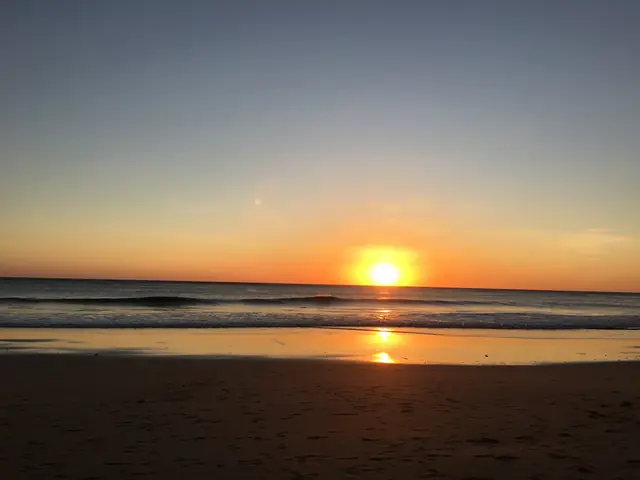
Because the beach faces west, the sun sets over the ocean, and much of the town walks down to the sand every evening to watch it. The dry season, from December to April, usually brings the clearest skies, while green season sunsets can be especially colorful after an afternoon shower.
Arrive a little early to find a spot, and use a small light to walk back after dark. For more ideas, see our guide to Tamarindo sunset tours.
Practical tips for your beach day
- The sun is strong all year: use reef-friendly sunblock, a hat and shade at midday.
- Do not leave valuables alone on the sand while you swim.
- Take all your trash with you and leave no plastic behind.
- Do not feed wildlife, including iguanas and birds.
- Bring water and drink often, especially in the dry season.
Wildlife tours next to Tamarindo beach
A few minutes from the north end of the beach, the estuary is home to crocodiles, herons and howler monkeys. Our Tamarindo estuary tour by boat costs $40 per person for 2 hours, with pickup from Tamarindo or Langosta included. It enters Las Baulas Marine National Park with the high tide, so the time changes daily and we confirm it by WhatsApp after you book.
To see the coast from above, the Tamarindo horseback riding tour ($50 per person, 1 hour) climbs to ocean viewpoints and finishes along the sand. From November 12, the Sunset and Baby Turtle Release ($50 per person) departs from Tamarindo at 3:30 pm. To explore other shores, see beaches near Tamarindo.
Want to add wildlife to your beach days? Book the Tamarindo boat tour with Tamarindo Estuary Tours Mi Rey online with a deposit, and pay the balance on the day of the tour. If you have questions about tides or timing, write to us on WhatsApp and we will help you plan.
Book these tours
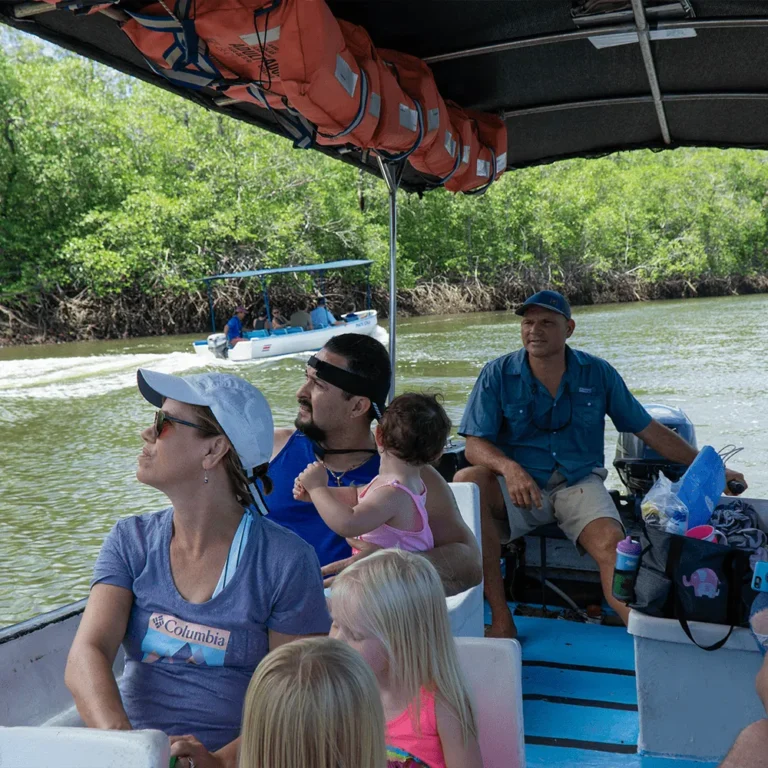 Shared Boat Tour (Mangrove Safari)$40 per personSee tour and book →
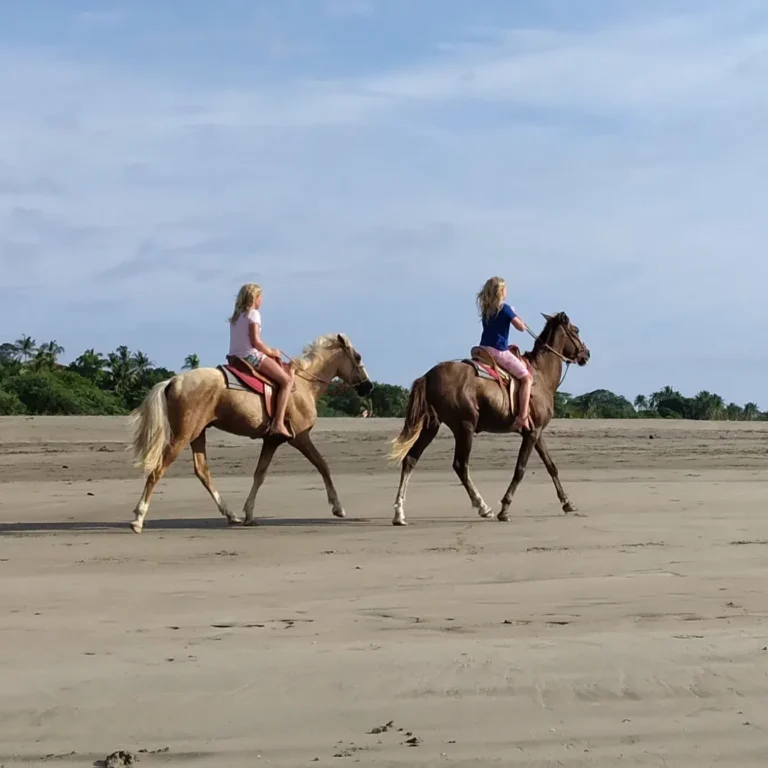 Horseback Riding Tour$50 per personSee tour and book →
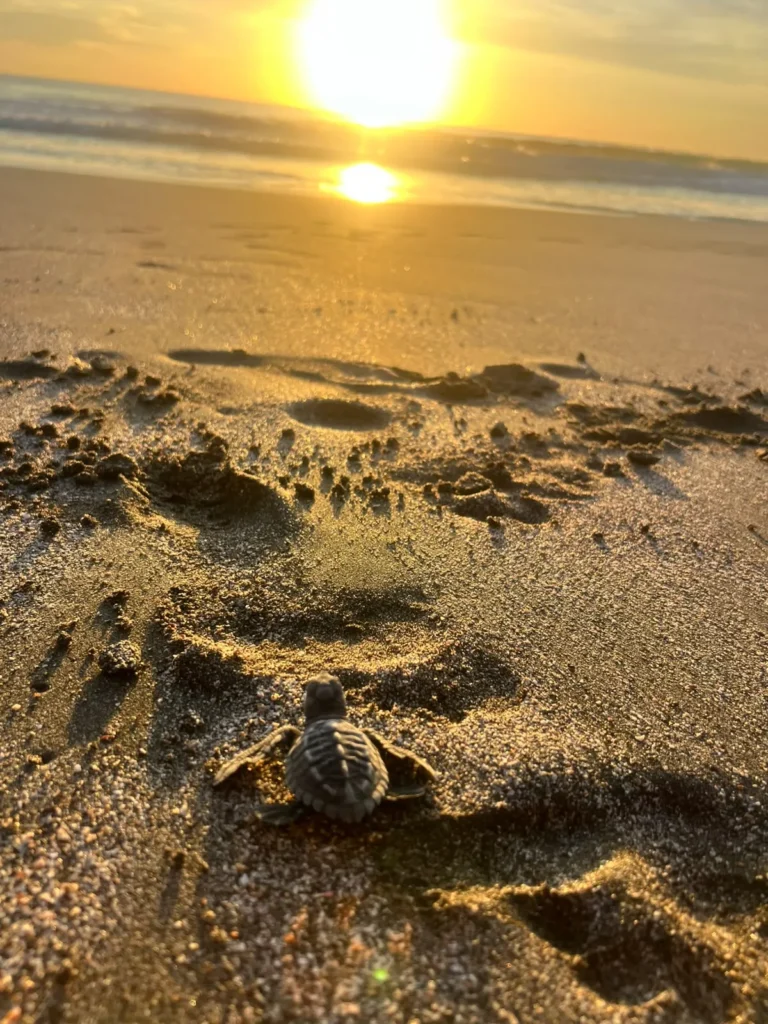 Sunset & Baby Turtle Release$50 per personSee tour and book →
Frequently asked questions
Is Tamarindo beach good for swimming?
Yes, in many areas and conditions, but it is an open Pacific beach with waves and currents that change with the tide and the swell. Swim where other people are swimming, avoid the estuary mouth and stay out of the water when the sea looks rough.
Are there lifeguards on the beach in Tamarindo?
Do not assume there is a lifeguard watching your section of the beach. Lifeguard coverage on Costa Rican beaches can be limited and can change, so ask at your hotel and plan to look after yourself and your group.
Are there crocodiles at the Tamarindo river mouth?
Yes. American crocodiles live in the Tamarindo estuary, at the north end of the beach, and can move through the river mouth. Do not swim, wade or let pets play near the estuary mouth.
Where are the tide pools in Tamarindo?
Around the rocky points of the beach at low tide, especially toward the south end on the way to Playa Langosta. Wear water shoes, do not take or move animals and watch the incoming tide.
What is the best time of day to watch the Tamarindo sunset?
Be on the sand a little before sunset, which happens in the early evening all year because Costa Rica is close to the equator. The dry season, December to April, usually brings the clearest skies.
More Tamarindo guides
 BeachesPlaya Grande, Costa Rica: The Beach Across the Tamarindo EstuaryPlaya Grande, Costa Rica: the protected beach across the Tamarindo estuary in Las Baulas park, its surf, leatherback nesting rules and how to visit by day.
 BeachesPlaya Langosta Guide: The Quiet Beach South of TamarindoPlaya Langosta guide: the quiet beach south of Tamarindo, how to walk there with the tide, its river mouth, swimming, turtle rules and tours with pickup.
 BeachesBeaches Near Tamarindo: A Local Guide to the CoastBeaches near Tamarindo: Playa Grande, Langosta, Conchal, Flamingo, Avellanas, Playa Negra and Junquillal, what each is best for and safety tips for the sea.
 Plan your tripBest Tours in Tamarindo: A Local Operator's GuideBest tours in Tamarindo ranked by a local operator: estuary boat, kayak, turtles, horseback and day trips, with the price and length of all 13 tours.
 Plan your tripThings to Do in Tamarindo, Costa RicaThings to do in Tamarindo, Costa Rica: beach and sunset, the mangrove estuary, sea turtles, horseback rides, day trips and town life, with local tips.
 Plan your tripThings to Do in Tamarindo at Night: Turtles, Sunset and TownThings to do in Tamarindo at night: a turtle nesting tour, the sunset and baby turtle release, dinner in town and safety tips for walking after dark.