Guanacaste is one of the best places to see sea turtles in Costa Rica, because several species nest on the same stretch of coast around Tamarindo. Short answer: four species nest near Tamarindo. The olive ridley is the most common, the green turtle (called the black turtle on this coast) is also seen often, the hawksbill appears from time to time and the leatherback, the largest of all, has become rare. This guide explains how to recognize each one, how they nest, how threatened they are and where each nests near Tamarindo.
Sea turtles in Costa Rica: the four species near Tamarindo
- Leatherback (baula): the giant, with a soft, leathery shell. Rare today.
- Olive ridley (lora): small and olive colored. The most common, famous for the arribadas.
- Green or black turtle (verde or negra): medium size, dark shell, rounded head.
- Hawksbill (carey): pointed beak and a patterned shell. Occasional.
Leatherback turtle
The leatherback is the largest sea turtle in the world. Its shell often measures more than 1.5 meters (about 5 feet) and adults can weigh several hundred kilograms. Instead of hard plates, it has a thick, dark skin with ridges along the back. It feeds mainly on jellyfish and travels thousands of kilometers across the ocean.
Nesting habits
Females come ashore at night and lay several nests in one season, roughly ten days apart. Near Tamarindo, the leatherback season runs from October to February or March, with the most activity in December and January.
Conservation status
The leatherback is endangered, and the Eastern Pacific population is among the most threatened in the world. The number of females nesting at Playa Grande has declined sharply in recent years. Las Baulas Marine National Park, named after this turtle, closes its nesting beach during the season to protect it. Learn more in our Las Baulas National Park guide.
Olive ridley turtle
The olive ridley is one of the smallest sea turtles. Its shell measures around 60 to 70 centimeters (about 2 feet), it is olive gray in color and adults usually weigh less than 50 kilograms. It eats crabs, shrimp, jellyfish and algae.
Nesting habits
The olive ridley nests in two ways. Many females nest alone on beaches all along the coast, mostly at night and mainly during the rainy months. At a few beaches, such as Ostional, thousands arrive together in mass nesting events called arribadas. The main arribada season at Ostional is August to December, with peaks from September to November, and smaller arribadas are possible from May. Read our Ostional arribada guide for details.
Conservation status
It is the most abundant sea turtle in the world, but it is still considered vulnerable and depends on the protection of its nesting beaches.
Green turtle (black turtle)
On the Pacific coast of Costa Rica, the green turtle is known as the black turtle because of its dark shell. It is the Eastern Pacific form of the green turtle and is usually smaller than green turtles from other oceans, with a shell often around 80 centimeters to 1 meter. It has a small, rounded head. Adults feed on seagrass and algae.
Nesting habits and status
It nests at night and is, together with the olive ridley, one of the turtles we see most often on our night tour. Like all sea turtles in Costa Rica, it is protected by law, and its future depends on conservation on both land and sea.
Hawksbill turtle
The hawksbill has a narrow, pointed beak and a beautiful shell with overlapping plates in amber and brown tones. It is medium sized and feeds mainly on sponges around rocks and reefs. It is critically endangered, largely because its shell was hunted for decades. On our nesting beaches it appears from time to time, but sightings are uncommon.
How to tell them apart on the beach
- Size: a leatherback is far larger than any other species; olive ridleys are the smallest.
- Shell: leathery and ridged on the leatherback, dark and smooth on the black turtle, olive and round on the olive ridley, patterned on the hawksbill.
- Head: the hawksbill has a pointed beak; the green turtle has a short, rounded snout.
- Tracks: leatherbacks and green turtles leave symmetrical tracks, while olive ridleys and hawksbills leave alternating tracks.
Your guide will help you identify the species during the tour.
Where each species nests near Tamarindo
- Playa Grande: historically one of the main leatherback nesting beaches of the Pacific, protected by Las Baulas Marine National Park and closed during the season.
- Playa Minas and Playa Jesús: where our Turtle Nesting Tour goes ($60 per person). You will see mostly olive ridley and black turtles, sometimes hawksbills and, occasionally, a leatherback.
- Ostional: 2 hours south of Tamarindo, the site of the olive ridley arribadas. Our Ostional Arribada Tour costs $130 per person, minimum 4 people. Ask us on WhatsApp for the next expected arribada.
For a night on the beach, read about the tour in our Playa Grande turtle tour guide, and check the best time to see turtles in Guanacaste before choosing your dates.
Why sea turtles need protection
Sea turtles face threats at every stage of life: nests taken or flooded, artificial lights that confuse hatchlings, plastic in the ocean and accidental capture in fishing gear. Respectful tourism helps, because it gives local communities a reason to protect nesting beaches.
Tamarindo Estuary Tours Mi Rey offers three ways to meet these turtles: the night nesting tour, the Ostional arribada and the Sunset and Baby Turtle Release, available from November 12. Book online with a deposit, and if you are not sure which one fits your dates, write to us on WhatsApp and we will help you choose.
Book these tours
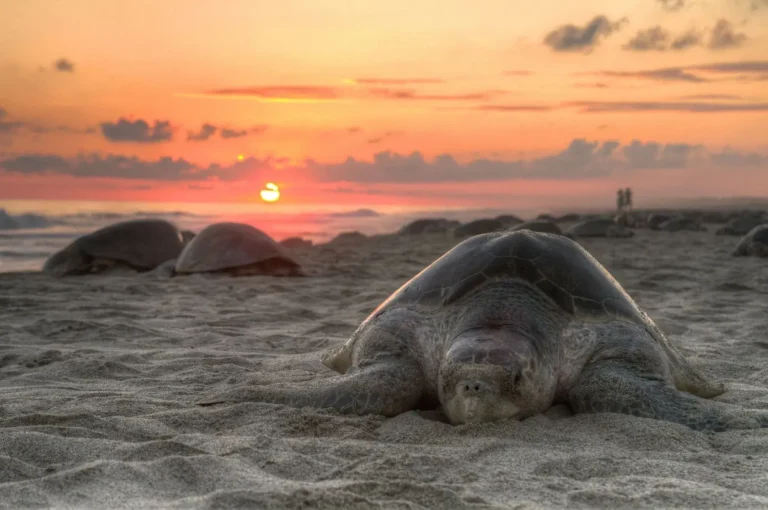 Turtle Nesting Tour$60 per personSee tour and book →
 Ostional Arribada Tour$130 per personSee tour and book →
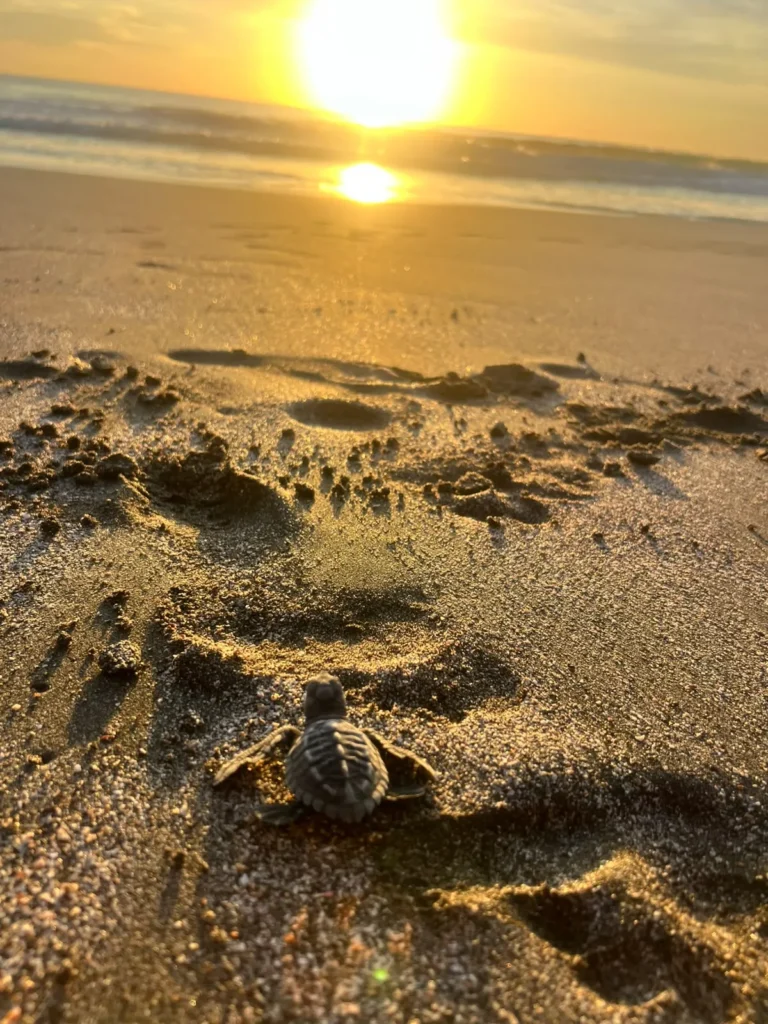 Sunset & Baby Turtle Release$50 per personSee tour and book →
Frequently asked questions
Which sea turtles nest near Tamarindo?
Four species nest on the beaches around Tamarindo: the olive ridley, the green turtle (known here as the black turtle), the hawksbill and the leatherback. The olive ridley is the most common.
Is the black turtle the same as the green turtle?
Yes. The black turtle is the Eastern Pacific form of the green turtle. It has a darker shell and is usually smaller than green turtles from other oceans.
What is the largest sea turtle in Costa Rica?
The leatherback, which is also the largest sea turtle in the world. Its shell can measure more than 1.5 meters and it has no hard plates, only a thick, leathery skin.
What do sea turtles eat?
It depends on the species. Leatherbacks eat mainly jellyfish, adult green turtles eat seagrass and algae, hawksbills feed on sponges and olive ridleys eat crabs, shrimp, jellyfish and algae.
Are sea turtles protected in Costa Rica?
Yes. All sea turtles are protected by law in Costa Rica, and several nesting beaches in Guanacaste are part of protected areas, such as Las Baulas Marine National Park.
More Tamarindo guides
- Best Time to See Turtles in Guanacaste: Month by MonthBest time to see turtles in Guanacaste, month by month: leatherbacks at Playa Grande, Ostional arribadas, olive ridleys and baby turtle releases.
- Playa Grande Turtle Tour: Night Nesting Near TamarindoPlaya Grande turtle tour from Tamarindo: why it goes to Playa Minas or Playa Jesús, the night step by step, species you may see and the $60 price.
- Turtle Watching Rules and Tips: What to Expect on a Night TourTurtle nesting tour rules and tips: no white light or flash, keep your distance, what to wear and bring, how long you wait and what happens if no turtles.
- Baby Turtle Release in Tamarindo: How It WorksBaby turtle release in Tamarindo: how the sunset release works, conservation rules, what visitors can and cannot do, price and dates. From Nov 12.
- Ostional Arribada Guide: How to Visit from TamarindoOstional arribada tour from Tamarindo: when the mass turtle nesting happens, how to get there, beach rules, what to bring and how our guided tour works.
- Best Tours in Tamarindo: A Local Operator's GuideBest tours in Tamarindo ranked by a local operator: estuary boat, kayak, turtles, horseback and day trips, with the price and length of all 13 tours.