At one point on our estuary tours, the boat or the kayaks pull up to the bank and everyone steps into a completely different world. Behind the mangrove lies the tropical dry forest of Guanacaste, a forest shaped by months without rain. Here our guides show you the national tree of Costa Rica, a tree with a trunk covered in thorns and, with luck, a troop of howler monkeys resting overhead.
This guide explains what makes this forest special, how to recognize its best-known trees and how it changes through the year, so you get more out of the walk.
Short answer: the tropical dry forest of Guanacaste is a forest adapted to a long dry season, roughly December to April, when many trees drop their leaves to save water. On the short forest walk included in our estuary tours, inside Las Baulas Marine National Park, you can see the Guanacaste tree (national tree of Costa Rica), the ceiba (national tree of Guatemala) and the thorny cedar, or pochote, and often hear or see howler monkeys.
What is the tropical dry forest of Guanacaste?
Most people picture Costa Rica as rainforest, but the northern Pacific lowlands are different. Guanacaste has two clear seasons: a dry season of about five months with almost no rain, and a rainy season, from about May to November, when storms soak the land.
Trees here must survive both extremes. Many are deciduous: they drop their leaves in the dry season, stop growing and wait for the rains. Others keep their leaves by growing near water, such as along the edge of the estuary.
Tropical dry forest is considered one of the most threatened tropical ecosystems in the world, because its fertile land and pleasant climate made it ideal for cattle and farming. In Guanacaste, protected areas such as Las Baulas keep some of it standing, and in parts of the province former pastures have grown back into forest.
Trees you will see on the walk
Guanacaste tree, the national tree of Costa Rica
The Guanacaste tree is hard to miss: a short, thick trunk and an enormous crown that spreads wider than it is tall, like a giant umbrella. It was declared the national tree of Costa Rica in 1959, and the province shares its name.
- Pods shaped like an ear: its dark brown, coiled seed pods look like a human ear, which explains its English nickname, ear pod tree.
- Shade for everyone: in the dry season, cattle, horses and people gather under its crown.
- A curious idea: some scientists think its pods were once spread by large mammals that are now extinct; today cattle and horses often do the job.
Ceiba, the national tree of Guatemala
The ceiba is one of the tallest trees of tropical America and was sacred to the Maya. Look at the base: huge buttress roots, like walls, help hold the tall trunk upright. Young ceibas often have thorns on the trunk.
Its pods open to release seeds wrapped in a light, cotton-like fiber called kapok, which was once used to stuff pillows and life jackets.
Thorny cedar, or pochote
The thorny cedar, known in Costa Rica as pochote or cedro espino, is the tree visitors remember for its trunk, covered in thick, cone-shaped thorns. Despite its name, it is not a true cedar.
Its wood is one of the most valuable in the country, used for furniture and construction. Heavy logging made wild trees scarce, and today pochote is also grown in plantations in Guanacaste.
Other plants your guide may point out
- Gumbo-limbo (jiñocuabe): easy to recognize by its red, peeling bark.
- Parasitic plants: mistletoes that grow on branches and take water and nutrients from their host tree.
- Seasonal flowers: in the dry months, some leafless trees burst into yellow or pink blooms.
Why the trees lose their leaves
Leaves lose water all day through tiny pores. In a forest that may go months without rain, keeping them would be too costly, so many trees drop them and rest. The forest floor fills with dry leaves, the canopy opens and sunlight reaches the ground.
Then the first heavy rains arrive, usually in May, and the change is dramatic. On the same trail where our guides walked under bare branches in April, visitors find a green, dense forest within a few weeks. If you can, compare the seasons using our guide to the best time to visit Tamarindo.
Animals of the dry forest near the estuary
- Howler monkeys: the stars of the walk. They eat mostly leaves and rest for long hours in the branches. You often hear their deep roar before you see them. More in our guide to monkeys in Tamarindo.
- Squirrels: active in the branches and around the forest edge.
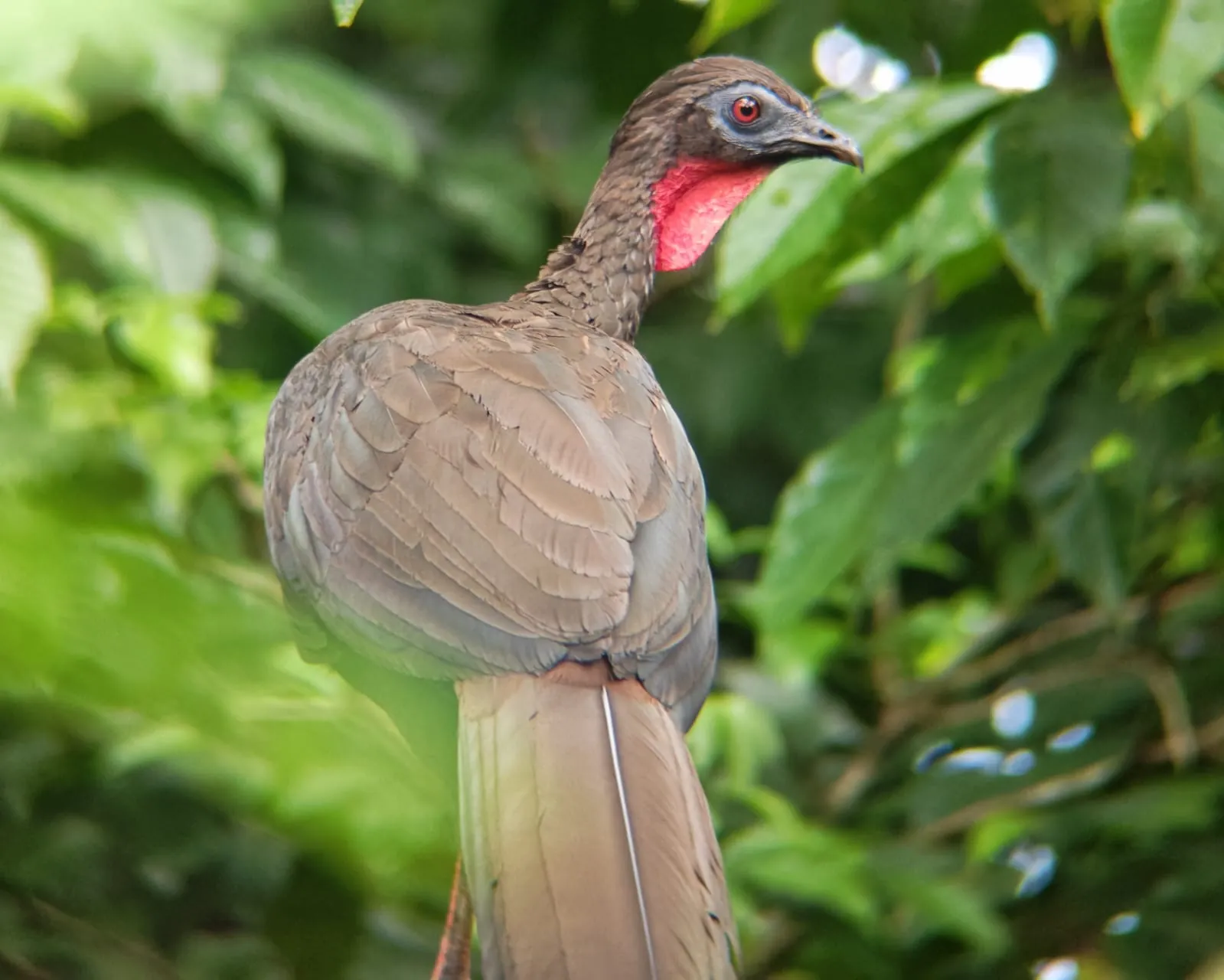
- Birds: white-throated magpie-jays, parakeets and parrots are common in the dry forest.
- Iguanas: spiny-tailed iguanas on trunks and logs, and green iguanas in trees near the water.
- Crabs: near the border with the mangrove, where the forest meets the mud.
Sightings depend on nature and cannot be guaranteed, but the trees are always there, and a good guide makes them as interesting as the animals.
Dry season or green season: what changes on the walk
- December to April (dry): bare branches make monkeys easier to spot, some trees bloom, the trail is dusty and the sun is strong. Bring a hat and water.
- May to November (rainy): the forest is lush and cooler in the shade, the trail can be muddy and mosquitoes are more common. Repellent is essential.
Las Baulas National Park tour: how to join the forest walk
The walk takes place inside Las Baulas Marine National Park, across the estuary from Tamarindo, and it is part of two of our tours. Learn more about the park in our Las Baulas National Park tour guide.
- Tamarindo estuary tour by boat: shared, $40 per person, 2 hours, minimum 2 people, children 2 and under free. Includes a bilingual guide, bottled water, seasonal fruit and pickup from Tamarindo or Langosta.
- Tamarindo kayak tour: shared, $60 per person, 2 to 2.5 hours, minimum 2 people. You paddle into the park with the tide and walk among dry forest trees, crabs, monkeys, parasitic plants and flowers.
Both tours follow the high tide, so the departure time changes every day and we confirm it by WhatsApp after you book. Wear water shoes, which are on the packing list for both tours. To see how the forest connects with the water, read about the mangrove trees of Tamarindo.
Ready to walk under a Guanacaste tree? Book the Tamarindo boat tour or the kayak tour with Tamarindo Estuary Tours Mi Rey online with a $15 deposit per person and pay the balance on the day of the tour, or write to us on WhatsApp to check the tide for your date.
Book these tours
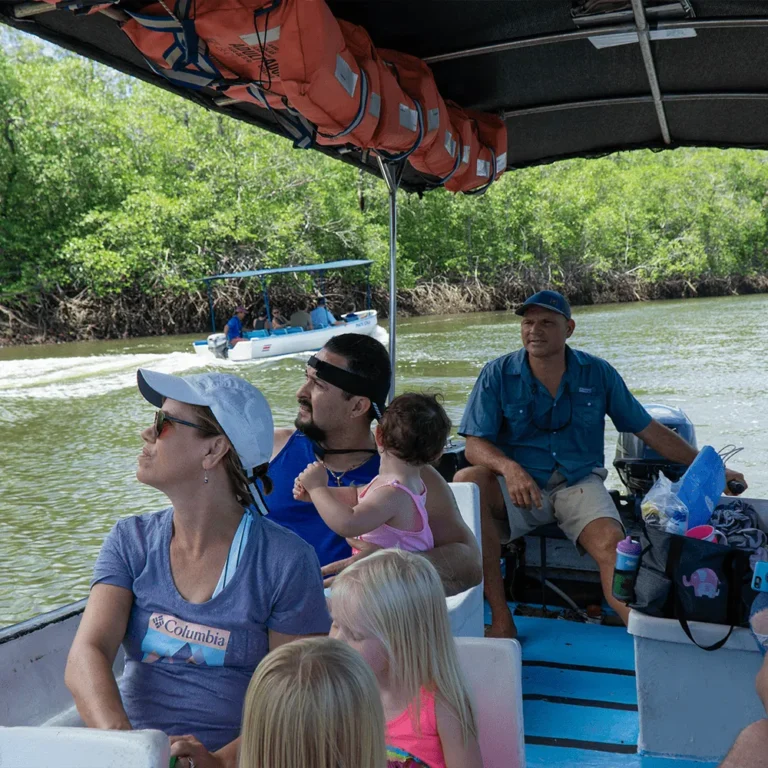 Shared Boat Tour (Mangrove Safari)$40 per personSee tour and book →
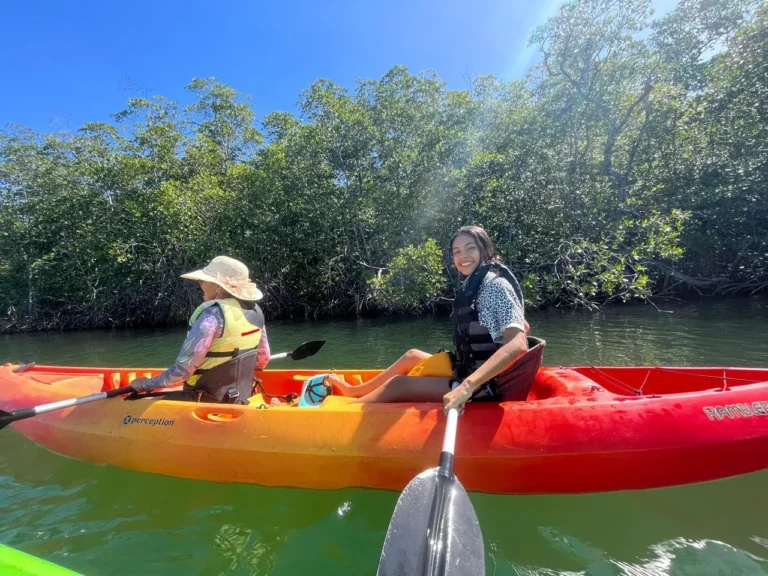 Shared Kayak Tour$60 per personSee tour and book →
Frequently asked questions
What makes the tropical dry forest of Guanacaste different?
It lives with a long dry season, roughly from December to April, followed by months of heavy rain. To survive the drought, many of its trees drop their leaves, so the same forest looks gray and open in the dry months and lush and green in the rainy season.
Why is the Guanacaste tree the national tree of Costa Rica?
It was declared the national tree in 1959. Its huge, umbrella-shaped crown gives shade to people and animals during the hot dry season, and the province of Guanacaste shares its name.
Is the dry forest walk included in the Tamarindo estuary tour?
Yes. The shared boat tour includes a short walk in the tropical dry forest of Las Baulas, and the shared kayak tour also stops for a forest walk inside the park. Wear water shoes and bring insect repellent.
Is it easier to see howler monkeys in the dry season?
Often, yes. When many trees are bare, a troop resting in the branches is easier to spot. In the rainy season the leaves hide them better, but you can still hear their deep roar from far away.
When is the dry forest at its greenest?
From about May to November, during the rainy season, the forest turns green within weeks of the first rains. In the dry months many trees are leafless, and some of them bloom with bright yellow or pink flowers.
More Tamarindo guides
 Estuary, mangroves and wildlifeTamarindo Estuary: Crocodiles, Tides and What to BringPlan your Tamarindo estuary tour: crocodiles, herons and howler monkeys in Las Baulas, why the tide sets the time, what to bring, and boat or kayak prices.
 Estuary, mangroves and wildlifeNature Tours in Tamarindo: Estuary, Turtles, Forest and WaterfallsNature tours in Tamarindo: estuary boat and kayak tours, turtle nesting and releases, sloths, waterfalls and volcanoes, with prices, durations and seasons.
 Estuary, mangroves and wildlifeBoat or Kayak? How to Choose Your Mangrove Tour in TamarindoTamarindo kayak tour or boat tour? Compare shared and private options by effort, wildlife, kids rules, tides and price, from $40 per person.
 Estuary, mangroves and wildlifeCrocodile Tour in Tamarindo: Where and How to See Wild CrocodilesCrocodile tour in Tamarindo: where to see wild American crocodiles, how they behave, safety rules, the best tide and photo tips. Boat tours from $40.
 Estuary, mangroves and wildlifeAmerican Crocodile Facts: Meet the Crocodile of the Tamarindo EstuaryAmerican crocodile facts: how big it gets, what it eats, how it lives in salt water, how to tell it from a caiman and where to see one near Tamarindo.
 Estuary, mangroves and wildlifeTamarindo Mangrove Tour: Why the Mangrove Forest MattersTamarindo mangrove tour guide: the types of mangroves, why they are a nursery for fish and wildlife, and how to explore them by boat or kayak from $40.